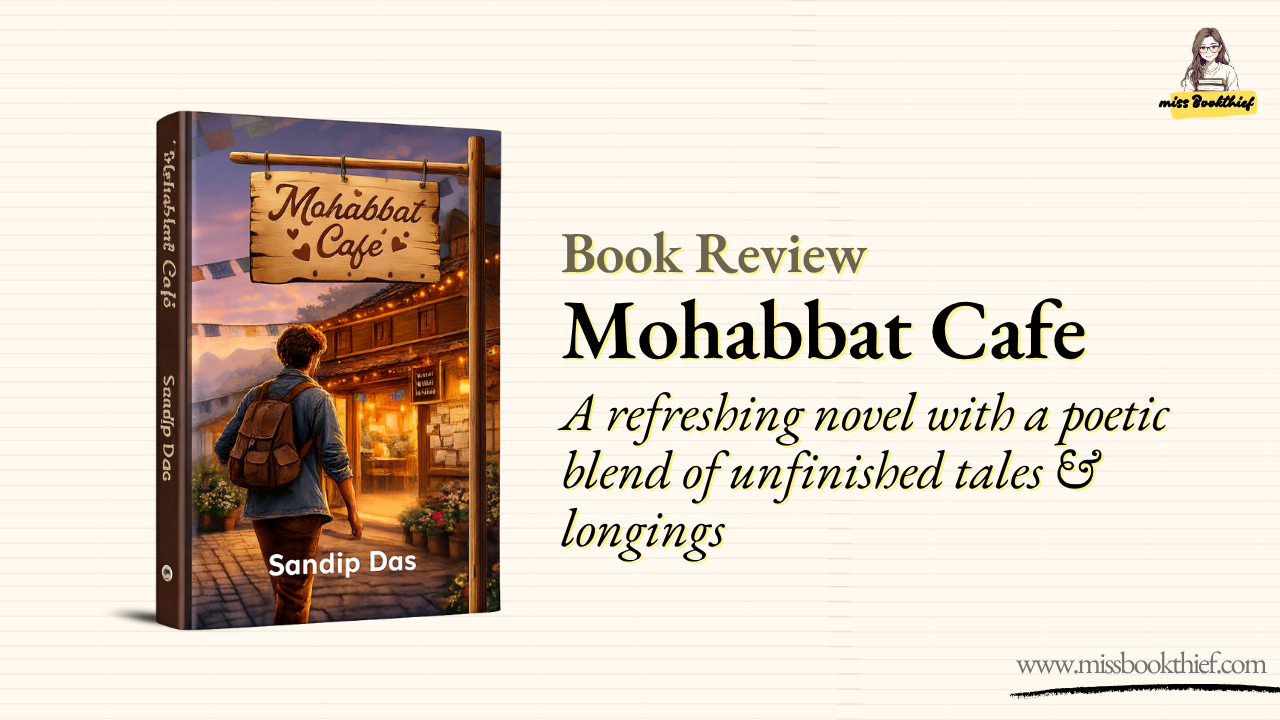
Mohabbat Cafe by Sandip Das: Review & Analysis
Plot Summary of Mohabbat Café
Set in the misty hills of McLeod Ganj, Mohabbat cafe is about everything that remains unfinished such as love, relationships, dreams, etc. The story revolves around a café that becomes a refuge for those carrying unfinished conversations, unsent messages, and memories that refuse to fade. The narrative follows multiple characters such as Ayush, Rhea, Ira, Saira, Shamshad, Dev, Asha, Meher, and Mayank. Each navigating their own versions of love, loss, and unresolved grief. There are no dramatic confrontations or sudden twists. Instead, connections form gently through shared silences and small, almost invisible shifts.
Review of Mohabbat Café
Mohabbat Café is not driven by the plot, but by its characters. It is an experience shaped by mood, emotion, and stillness of its characters. Das writes with a softness that feels deliberate and meant to be experienced by whosoever comes to the page. The writing is simple yet emotionally powerful, making the story engaging. It promises to leave a mark on the mind; since readers will relate easily with the stories of the characters. The book invites readers to sit by a window on a rainy afternoon with a cup of tea, when nothing urgent happens, yet everything shifts quietly within. Rather than focusing on dramatic arcs, the novel explores unfinished love, unspoken grief, unsaid feelings, and lingers long in the spaces that most stories move past.
Silence is the overarching theme above all else. The pauses and stillness in moments become the real narrative, inviting readers to feel the story emotionally than visually. The result is a reading experience that feels personal and reflective; as if the story is unfolding within you as much as on the page.
Character Analysis in Mohabbat Café
Ayush and Rhea
Their relationship evolves in the smallest of ways. There is no dramatic turning point, only quiet progression. A moment of recognition, a shift in understanding, a sense that something has softened. Their story captures how connection can grow without being declared.
Ira and Saira
Through them, the novel explores the lingering weight of relationships that never found closure. Their presence adds emotional depth, showing how different people carry love in different ways.
Mayank and Mira
These characters expand the emotional landscape of the novel, bringing in varied experiences of grief, longing, and acceptance. Each feels like a fragment of a larger shared experience.
The Café
The café itself feels like a living presence. It does not speak or explain, yet it holds space for every story that enters it. It becomes a silent witness to pain, healing, and everything in between.
Setting & Themes in Mohabbat Café
Mohabbat Café draws deeply from its surroundings to set the emotional tone of the novel. The constant rain, drifting clouds, prayer flags, misty mountains, and the slow rhythm of life create a space where time feels softer, almost stretched, allowing people to sit with feelings they have long avoided. In a place where visibility is often blurred by fog and rain, the novel reflects the inner lives of its characters who are equally uncertain and searching for clarity.
McLeod Ganj also carries a sense of transience. People arrive and leave, stories cross paths briefly, and yet something stays behind. This mirrors the fleeting yet meaningful connections within the café. It becomes a meeting point not just for people, but for grief, longing, and hope.
Key themes in Mohabbat Café include:
- Unfinished love and emotional closure
- Grief and loss
- Silence as a form of connection
- Healing through shared human experiences
- Memory shaped by place and time
Writing Style in Mohabbat Café
Sandip Das uses a writing style that is simple, reflective, and engaging. It is also deeply evocative. The prose flows gently, often feeling poetic without becoming heavy. It allows the reader to move through the story at an unhurried pace. The book does not demand attention through thrilling twists or overwhelming drama. Instead, it invites you to slow down, reflect, and address, that which has been buried but unforgotten. The inclusion of visual elements and emotional details adds to the immersive quality, making the experience feel intimate and personal.
Strengths and Weaknesses of Mohabbat Café
- Deeply atmospheric and comforting narrative
- Emotional with themes of love, grief, and healing
- Smooth, poetic writing style
- Unique café setting
- Minimal plot progression
- Lack of high intensity scenes
- Slow pace may not suit all readers
Who Should Read Mohabbat Café?
This book is ideal for readers who enjoy slow, emotional, and character-driven stories. If you like books about love, loss, healing, and introspection, this novel will resonate deeply. It is especially suited for those who prefer atmospheric reads over fast-paced thrills.
Final Verdict for Mohabbat Café
Mohabbat Café does not tie things up neatly, and that feels honest. The conversations do not fully end and the emotions do not settle. And some stories feel like they are still unfolding somewhere beyond the last page. The people, their stories, and their unanswered questions seem to continue quietly even after the last page is turned. There is a gentle nudge that this is not the end of their journeys; only a pause, which leaves room for the possibility of a sequel that readers could continue to enjoy.
FAQs
Q1. Is Mohabbat Café worth reading?
Yes, Mohabbat Café is worth reading for those who enjoy emotional, slow paced stories about love, grief, and healing.
Q2. What genre is Mohabbat Café?
It is a contemporary literary fiction novel with elements of romance and introspective storytelling.
Q3. Is Mohabbat Café a fast paced book?
No, it is a slow and reflective novel that focuses more on emotions and atmosphere than plot.
Q4. Where is Mohabbat Café set?
The book is set in McLeod Ganj in Himachal Pradesh, and the hill town setting plays a key role in shaping its mood and emotional depth.
Q5. What is the main theme of Mohabbat Café?
The novel explores unfinished love, unspoken grief, emotional closure, and the healing power of human connection.
Q6. Is there a sequel to Mohabbat Café?
There is no official confirmation, but the open ended narrative leaves strong room for a continuation exploring the characters and their journeys further.