“Morality is a matter of money. Poor people cannot afford to have morals. So they have religion.”
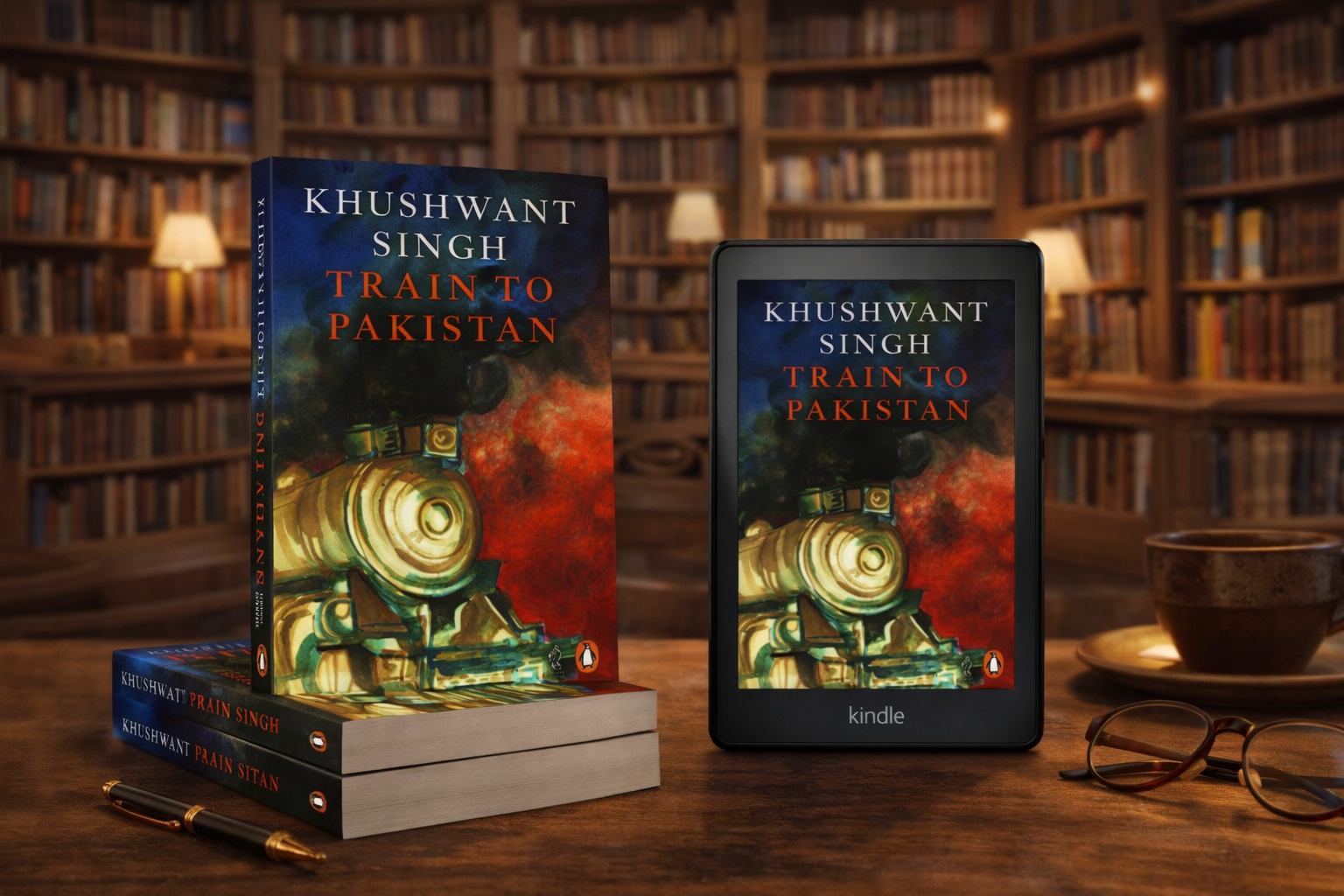
Train to Pakistan by Khushwant Singh is not merely a historical novel, it is an unflinching portrayal of one of the darkest chapters in Indian history, the Partition of 1947. Often described as one of the most powerful Partition narratives, this book leaves a lasting emotional imprint that is difficult to shake off.
Set in the fictional village of Mano Majra, the story begins with an eerie calm. Sikhs and Muslims coexist peacefully, largely untouched by the political upheaval unfolding across the country. However, this fragile harmony is soon disrupted by violence, suspicion, and fear. The murder of a local moneylender triggers a chain of events that exposes the fault lines within the community.
The narrative primarily revolves around three characters: Juggut Singh, a local badmash with a surprisingly human core; Iqbal, an educated outsider with political motivations; and Hukum Chand, a corrupt magistrate burdened by guilt. Through their perspectives, Singh explores morality, power, and the helplessness of individuals caught in the tide of history.
As the story progresses, tension grips Mano Majra. Rumors spread like wildfire, trust erodes, and fear becomes a constant presence. The most chilling element of the novel is the arrival of ghost trains, filled with the bodies of massacre victims, sent across borders as brutal messages of revenge. These haunting images elevate the narrative from fiction to something that feels painfully real.
The emotional climax builds around a horrifying plan to massacre innocent Muslim refugees being transported to Pakistan. In a moment of unexpected heroism, Juggut Singh rises above his past and sacrifices himself to save countless lives. His act stands as a rare glimmer of humanity in an otherwise bleak landscape.
What makes Train to Pakistan exceptional is its raw honesty. Singh does not romanticize history; instead, he presents it in all its brutality. His writing is stark, direct, and deeply evocative, forcing readers to confront the realities of violence, displacement, and communal hatred.
At its core, the novel questions the very idea of morality in times of chaos. It suggests that when survival is at stake, ethical boundaries often blur, leaving religion and identity as fragile constructs.
This book is not an easy read, but it is an essential one. It offers a vivid, unforgettable glimpse into the human cost of Partition and reminds readers of the enduring consequences of division.