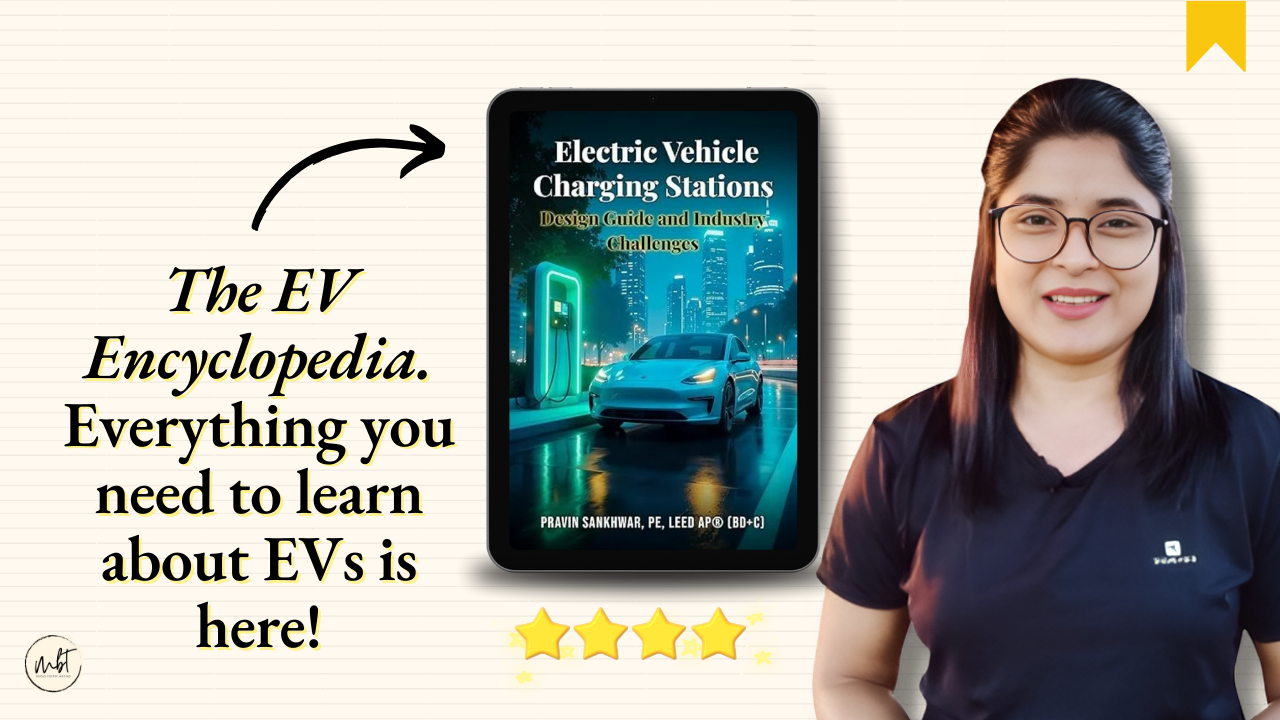

‘Electric Vehicle Charging Stations: Design Guide and Industry Challenges’ sheds light on the Electric Vehicle (EV) ecosystem encompassing types of EVs, Design technology, EV charging stations and its infrastructure needs, recent developments in growing markets, its co-relation with environment sustainability, usage and applications, international challenges, marketing and distribution strategies, case studies, and more. Everything one needs to know and learn about EVs, is well-researched and explained in this handbook that is nothing short of an encyclopedia for understanding how EVs work. As EVs gain momentum globally, the need for well-designed and efficient charging stations has become fundamental everywhere, making this book a valuable resource for professionals of the field.
Divided into 15 chapters, the book covers the life-cycle of EV charging stations, from conceptual design to practical implementation. Sankhwar begins by laying a strong foundation, introducing readers to the basics of EV technology and its rapid evolution, establishing the difference between EVs and Internal Combustion Engines (ICEs). He delves into the types of charging stations, their technical specifications, and their suitability for various use cases, such as residential, commercial, and public spaces, all with a view to grant a deeper and more experienced view of the processes and stages involved.
The core strength of the book lies in its focus on design principles. The book provides a comprehensive guide to site selection, energy requirements, grid integration, and hardware/software considerations. Readers will appreciate the detailed breakdown of topics such as load management, safety protocols, and the integration of renewable energy sources like solar and wind into charging station designs. It also addresses the industry’s challenges in making and managing EVs.
From navigating regulatory frameworks to addressing range anxiety and the need for standardization across charging networks, the author provides a balanced view of both the opportunities and hurdles in this space. The book also captures the emerging needs of the EV market, considering the shift towards faster charging technologies like DC fast charging and ultra-fast charging systems. As these technologies evolve, the book helps readers understand the impact of new developments on electrical infrastructure and the standards required to accommodate them.
The book combines technical rigor with accessibility, making it a handbook for engineers and technical experts who will find detailed analysis quite informative with its pictorial diagrams and formulae. Mr. Sankhwar enhances the theoretical content with case studies and examples from around the world, illustrating successful charging station projects and lessons learned from challenges faced. The inclusion of emerging trends, such as wireless charging, bidirectional chargers, and the potential of vehicle-to-grid (V2G) technology, positions the book as a forward-looking resource for EV researchers and innovators.
While the book is a commendable effort, it occasionally becomes dense with technical details, which may overwhelm readers without an engineering background; but informative nonetheless for enthusiasts of EV. Tip: Read it in parts over a period of time. Now available in major libraries across the United States, Electric Vehicle Charging Stations: Design Guide and Industry Challenges is a practical resource that bridges the gap between technical needs and industry demands. Pravin Sankhwar’s ability to combine detailed analysis with actionable ideas makes this book a must-read for anyone involved in the EV ecosystem.
Please note: I received an ARC from the author but the review remains unbiased.
Author Profile

Pravin Sankhwar has been recognized with a 2024 Global Recognition Award for his significant contributions to the electrical engineering industry, particularly in advancing best practices in electrical design engineering, promoting sustainability, and driving innovations in renewable energy. His extensive academic background, including a master’s degree from Michigan Tech, a bachelor’s degree from Malaviya National Institute of Technology, and PhD candidacy, combined with years of practical experience, position him as a leader in his field. Sankhwar’s commitment to environmental stewardship is evident in his leadership on various projects to reduce carbon footprints and foster eco-friendly initiatives in electrical power generation, distribution, and consumption.
Have you read ‘Electric Vehicle Charging Stations’? What did you think?