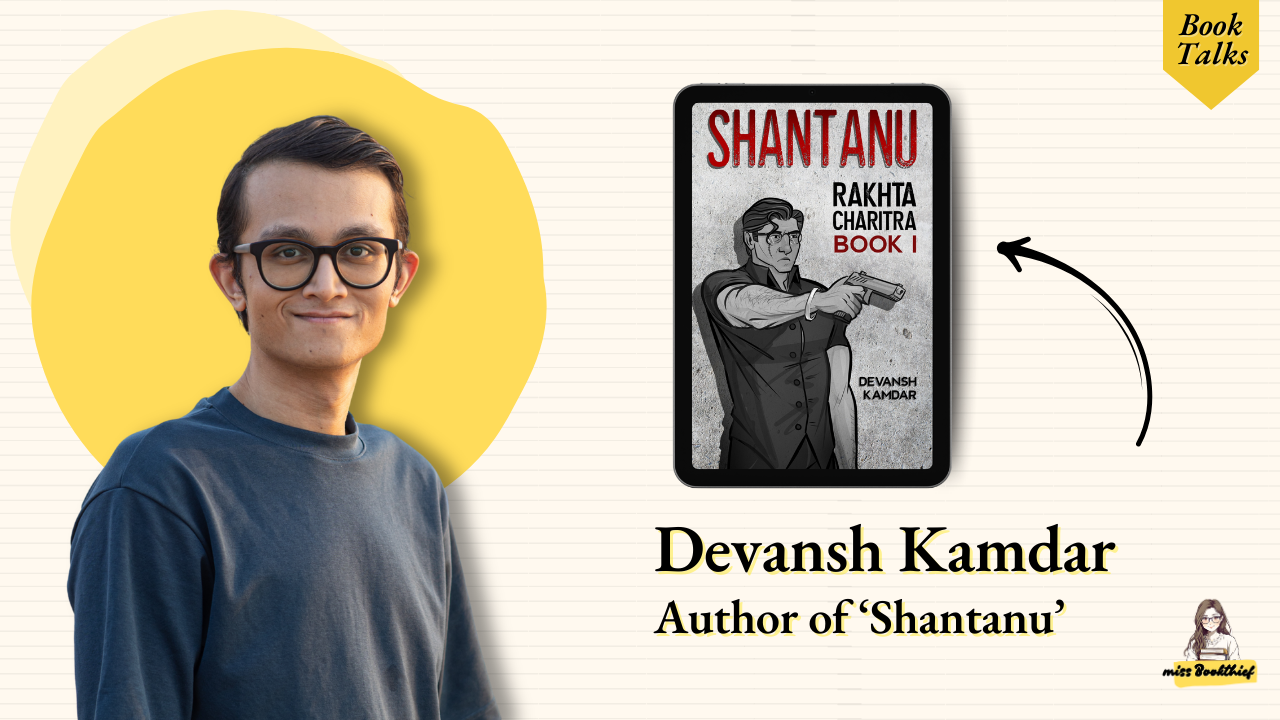
Shantanu, a hardened hitman known for his cold precision, is thrust into a web of moral turmoil when underworld kingpin Kshitij Bhosale assigns him a special target who will forever change his destiny. As Shantanu navigates through the sinister underbelly of the mafia, he is joined by a cast of unforgettable characters, including Vasu, the enigmatic strategist; Aabhay, the ambitious enforcer; and Puneet, the power-hungry gangster—each playing their part in this high-stakes game. Shantanu, the gripping debut installment in the Rakhta Charitra series, combines fierce action and masterful storytelling to tell the tale of one man’s fight to reclaim his goodness.

1. Can you tell us a little bit about your book? Why did you choose this genre and what’s the story behind the title?
The book follows Shantanu, a hitman from Mumbai, but instead of the usual cops-versus-gangsters narrative, it explores an internal power struggle within the criminal organization. In doing that, it shows you its hierarchy, mechanics, and people at every level. I chose this genre because stories about the underworld have always interested me.
2. What inspired you to write this story? How did you find the resources and research material for your book?
My main inspiration to write this novel was the character of Shantanu. Usually gangsters are shown as brash and loud people, but Shantanu is calm and direct. I loved that about him. He’s also not taken over by the flashiness of that line of work; he lives a simple, grounded life.
As for research, I read a lot of books and articles about the Mumbai underworld. I also saw classic Bollywood crime films (Satya, Vaastav, Parinda) and some interviews/documentaries on YouTube. At one point I was even about to meet a history-sheeter in person but sadly that didn’t materialize.
3. What was the most challenging aspect of writing this book? How did you overcome it?
The biggest challenge was managing the content. The words flowed out of me with ease, but organizing it all was a really messy and tedious process. As for how I overcame it, I just pushed through it, that’s all. It wasn’t fun, but I knew that it was a reality I’d have to face if I was to ever complete the book.
4. Are there any particular authors or books that have influenced the book?
Sacred Games by Vikram Chandra and Shantaram by Gregory David Roberts were both big influences in terms of language and style. For learning about the underworld, Maximum City by Suketu Mehta and various books by Hussain Zaidi were incredibly helpful.
5. What role did editing play in the writing process? How did you decide when the manuscript was ready for publication?
To be honest, I never really properly edited the book. I just kept making improvements randomly. There wasn’t a clear distinction between drafts. When I reached a version I was happy with, I asked a friend if he’d like to read it. I shared a chapter with him every week and we discussed it. Based on his feedback, I made some changes. By the end of that, I knew the project was ready for publication.
6. Do you have any upcoming projects or ideas for future books that you’d like to share with your readers?
Currently I’m working on a book about writing books. Since I’ve written, self-published, and marketed three books till now, I believe the know-how I possess can help first-timers avoid a lot of unnecessary headaches. So, I’m trying to put down everything I have to say about the process into a book. Beyond that, I’ve also begun work on the second book in the Rakhta Charitra series. This one will be a prequel to Shantanu and explore the life of Kshitijbhai, his humble beginnings and his brutal rise in the Bombay underworld.
7. In the age of digital publishing and social media, how do you engage with your readers and promote your work?
Marketing is still something that I’m learning about, but for Shantanu I mainly used Instagram and various blogs.
8. How do you balance your writing career with other aspects of your life, like work and family?
This has never been something that I thought about. I just have an innate sense of not overdoing things, so I can manage various aspects of my life without much hassle.
At one point of writing Shantanu, I was working for three companies as a freelance content writer while also going to the gym regularly and social events like comedy shows. I just enjoyed myself and went with the flow, didn’t think much of it.
9. What’s the pen ultimate takeaway for readers reading your book?
The core of the story that always pushed me to write it is that anybody can change at any time if they choose to do so. But I didn’t try to push that too much in the novel, the adventure of the story and the fun of the reading is more important. If a reader gets that message from the book then great, but more than that I hope that they enjoy the book. It’s like that famous quote: “If you want to send a message, try Western Union.”
10. What’s the one advice you’d like to share with aspiring writers of the genre?
Even if you’re writing in the crime genre, which is filled to the brim with novels and films, don’t feel compelled to be unique. Maybe the story you want to tell has been told before, but it hasn’t been told by you. Add little twists of your own, infuse it with your feelings. The main goal is for you to be happy with what you’ve created. Don’t write to please other people, write for yourself.
Read the engaging ‘Shantanu’ now.