
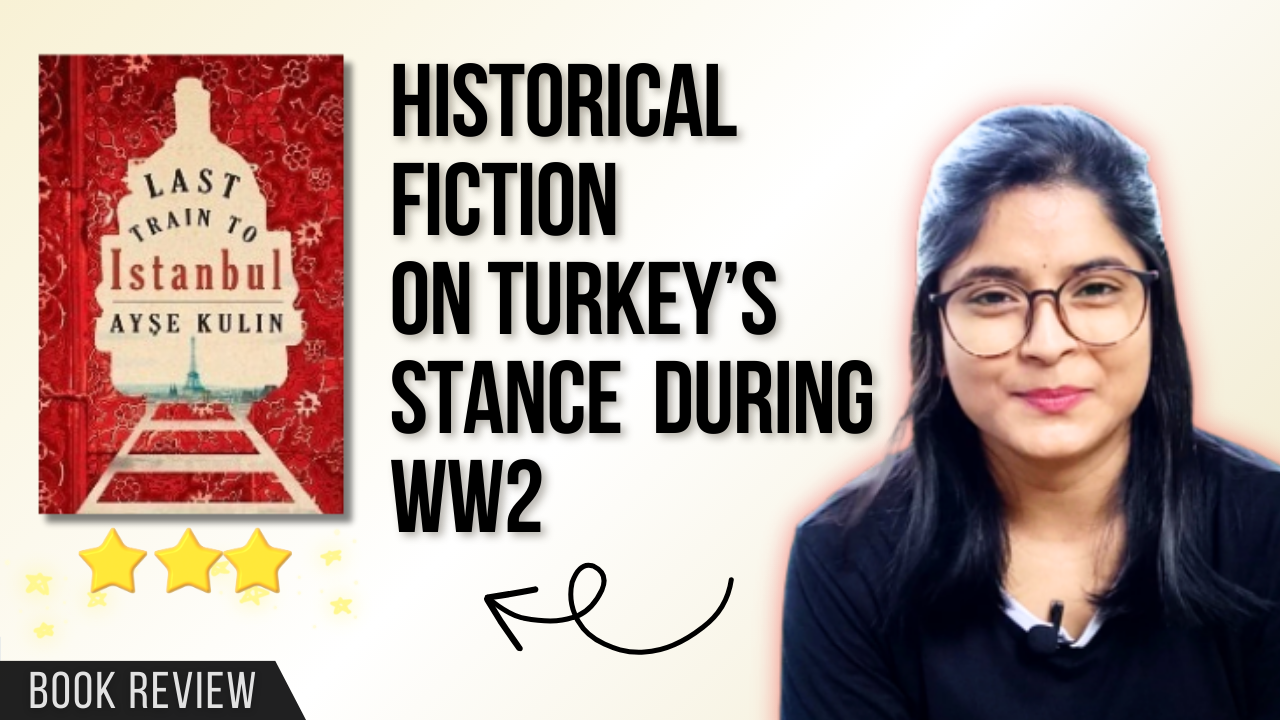
Author: Ayşe Kulin | Genre: Historical Fiction | Pages: 417
Ayşe Kulin’s “Last Train to Istanbul,” translated from Turkish by John W. Baker, is a work of historical fiction that sheds light on Turkey’s efforts for its Jewish citizens amidst Hitler’s Nazi occupation of France during World War II.
“Lack of love damages older people just as much as it damages the young.”
In this book, the focus is not on the battlefields and the grim realities of war but rather on the political upheaval gripping Turkey during WW2 as neighboring nations start to crumble under Germany’s political tactics. As Hitler’s power surges across Europe, Turkey finds itself in a difficult position with regards to its global alliances. Turkey’s struggle lies in maintaining its neutrality amid this political chaos. This book presents a different viewpoint of World War II, focusing on Turkey’s role and the humanitarian efforts made by Turkish diplomats to save their Jewish citizens.
“Don’t exaggerate, child; you’ll be eight. You’re in such a hurry to get older, aren’t you? Wait until you do get older and then it will be the reverse.”
At the heart of the novel is a poignant family saga – a Turkish family fallen apart when the younger daughter -Selva – decides to marry a Jew, despite family’s contradictions. This leads the newly-wed couple to move to France; which isn’t under Hitler’s scrutiny yet. When Hitler’s forces occupy France, Selva has to find a way to rescue herself, her Jewish husband, Rafael, and their son, from possible arrest and exile.
“I’ll never marry a diplomat, that’s for sure.” “Why, my darling? Don’t tell me you’re not proud of your father.” “I am, but…it’s just that…well, I’d rather marry someone who can spend time with me.”
The book’s synopsis is somewhat misleading making it seem like a romance novel. But it isn’t so. ‘Last Train to Istanbul’ tries hard to establish how Turkey with its officials also faced a tough time during WW2 but took all necessary measures to avoid detention of its Jews. The narrative takes time to fully immerse the reader, primarily due to excessive exposition, but that’s a tad too much to keep glued to the happenings. The narration keeps faltering way too much between Turkey and France and most of this constant flipping was redundant given the true nature of the plot. Important to mention the constant in and out of several insignificant characters just doesn’t help the tedious reading and falls apart too many times.

In numerous aspects, Turkey herself is the main character who assumes a significant role within the narrative. Ayşe Kulin unmistakably portrays her homeland in the most favorable of terms. The efforts made by Turkey to rescue Jews from the clutches of the Nazis were commendable but the attempts seemed too documented and the flavor of authenticity washed down. Additionally, Kulin established quite a few times how centuries prior, Turkey extended a welcoming hand to Jews expelled from Spain, revealing a recurring pattern. The author biasedly regards Turkey’s government as heroic, even though all through the book Turkey boasts of remaining neutral throughout the war.
This book is a one-time read but a difficult one at that. Not the best book to read on the holocaust since there are several others on the subject that are very well-written. But if someone wants to know what the situations in Turkey were during the period, this sure is a good guide.
About the Author
Ayşe Kulin is a Turkish contemporary novelist and columnist.
Kulin graduated in literature from the American College for Girls in Arnavutköy. She released a collection of short stories titled Güneşe Dön Yüzünü in 1984. A short story from this called Gülizar was made into a film titled Kırık Bebek in 1986, for which she won a screenplay award from the Turkish culture ministry. Kulin worked as a screen writer, cinematographer and producer for many films, television series and advertisements. In 1986, she won the Best Cinematographer Award from the Theatre Writers association for her work in the television series Ayaşlı ve Kiracıları.
In 1996, she wrote a biography of Münir Nureddin Selçuk titled Bir Tatlı Huzur. With a short story called Foto Sabah Resimleri she won the Haldun Taner Short Story Award the same year and the Sait Faik Story Prize the next year. In 1997, she was chosen as the “Writer of the year” by the İstanbul Communication Faculty for her biographical novel Adı Aylin, She won the same award the next year for her short story Geniş Zamanlar. In November 1999, she wrote a novel called Sevdalinka about the Bosnian Civil War and in 2000, a biographical novel called Füreyya. In June 2001, she put out a novel titled Köprü about drama in Turkey’s eastern provinces and how they shaped the republic’s early history.
In May 2002, Kulin wrote a novel titled Nefes Nefes’e about the Turkish diplomats who saved in the lives of Jews during the holocaust in World War 2.
Have you read ‘Last Train to Istanbul’? Do share your thoughts below.
