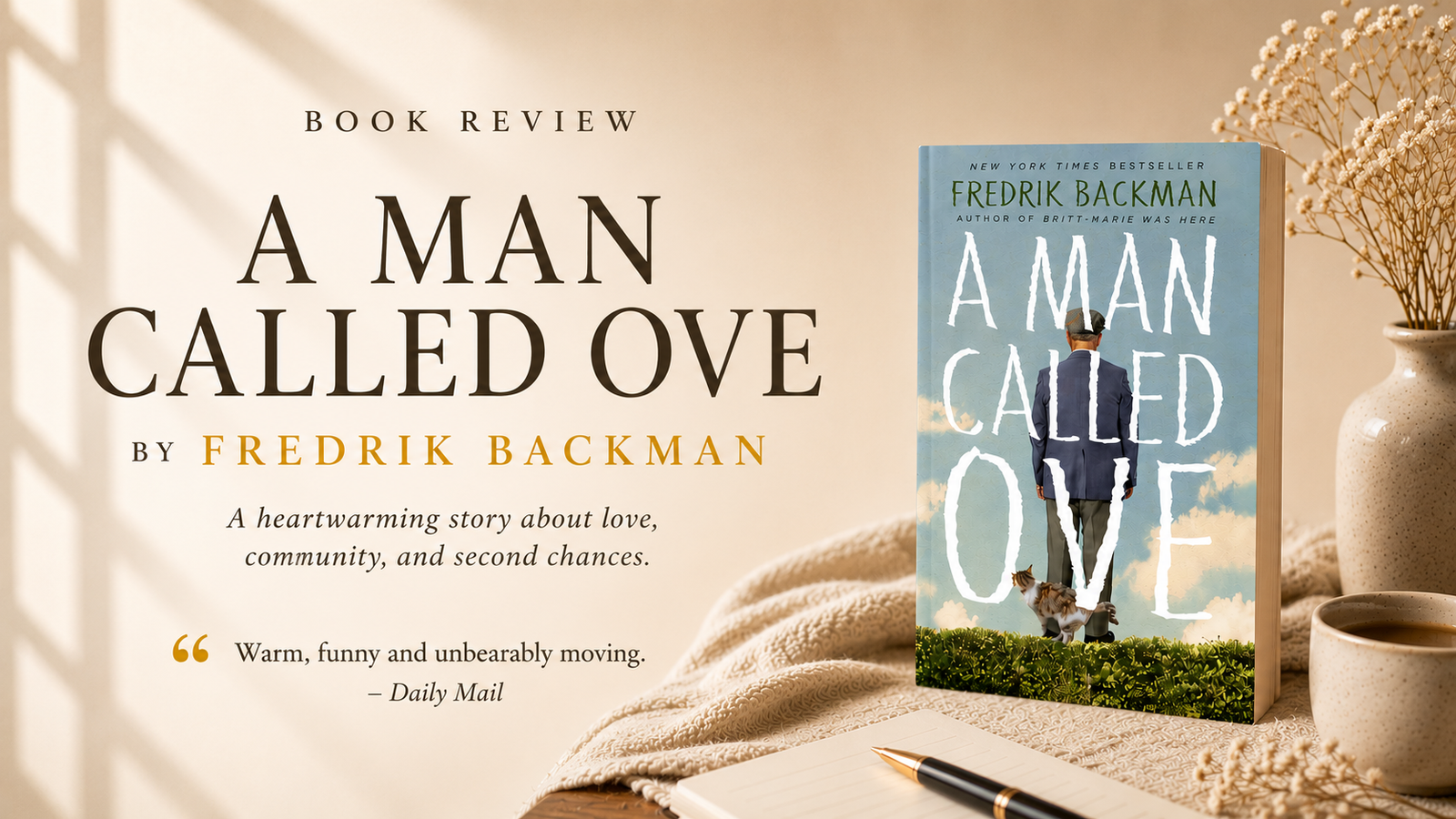
Some books are written to merely entertain. And then some change the way you perceive people, treat people, and learn from them. What begins as the story of an irritable old widower who scolds his neighbors gradually unfolds into a deeply moving meditation on grief, love, loneliness, and the extraordinary ways ordinary people shape each other’s lives. Heartwarming without becoming sentimental and humorous without diminishing its emotional depth, A Man Called Ove by Fredrik Backman reminds us that behind every difficult exterior lies a story waiting to be understood.
Plot Summary of A Man Called Ove by Fredrik Backman
At first glance, Ove seems like the neighbour everyone tries to avoid. He patrols his housing society, complains about improperly parked cars, distrusts modern technology, and has little patience for inefficiency or unnecessary conversation. Recently widowed and increasingly isolated, he appears to have little reason left to engage with the world around him.
Everything changes, however, when an energetic young family moves in next door. Their accidental interactions slowly disrupt Ove’s carefully controlled routine, forcing him into unexpected friendships and reluctant acts of kindness. Meanwhile, Backman alternates between Ove’s present and his past, revealing the experiences that shaped his uncompromising personality. Readers witness his unwavering devotion to his late wife Sonja, the heartbreaks that defined his life, and the quiet values that continue to guide him even in loss. Gradually, the novel transforms from the portrait of a solitary man into an uplifting story about community, compassion, and finding reasons to keep living.
Review of A Man Called Ove by Fredrik Backman
At first, A Man Called Ove appears to centre on an elderly curmudgeon whose primary pastime involves correcting other people’s mistakes. As the narrative unfolds, however, Fredrik Backman carefully peels away those surface impressions to reveal a profoundly human story about grief, loyalty, resilience, and second chances.
Rather than relying on dramatic twists, the novel derives its emotional power from everyday moments. A neighbour borrowing a ladder, a child asking innocent questions, or a stray cat refusing to leave gradually become catalysts for healing and connection. Consequently, readers begin to understand that Ove’s strict routines are less about stubbornness and more about preserving a world that once made sense.
Backman also strikes an exceptional balance between humour and heartbreak. One moment invites genuine laughter through Ove’s dry observations and uncompromising logic, while the next explores profound loneliness or enduring love with remarkable sensitivity. This tonal balance prevents the story from becoming overly sentimental and allows its emotional moments to land with even greater force.
Ultimately, A Man Called Ove encourages readers to look beyond first impressions. In doing so, it becomes a powerful reminder that empathy often begins by listening to stories we might otherwise overlook.
Characters Analysis in A Man Called Ove by Fredrik Backman
Ove
Ove is one of contemporary fiction’s most unforgettable protagonists. Practical, disciplined, and fiercely principled, he believes in honesty, responsibility, and doing things properly. Although his bluntness initially makes him appear intimidating, Backman gradually reveals the vulnerability beneath that exterior. As readers uncover Ove’s history, his frustration with the changing world becomes understandable rather than frustrating. His emotional journey forms the heart of the novel and demonstrates how grief can manifest in unexpected ways.
Sonja
Despite appearing largely through memories, Sonja remains one of the story’s most influential characters. Warm, optimistic, and compassionate, she complements Ove’s rigid worldview and teaches him to see beauty beyond rules and routines. Even after her passing, her presence continues to shape Ove’s decisions, illustrating how love can endure through memory, values, and everyday habits.
Parvaneh
Parvaneh injects warmth and persistence into Ove’s carefully ordered life. Unlike many others, she refuses to be intimidated by his gruff demeanour and steadily draws him back into human connection. Through their evolving friendship, Backman explores how unlikely relationships often become the strongest sources of healing.
Setting & Themes in A Man Called Ove by Fredrik Backman
The novel unfolds within an ordinary Swedish residential neighbourhood, yet Backman transforms this familiar environment into a deeply symbolic space where relationships quietly evolve. Garages, pathways, kitchens, and shared courtyards become places where isolation gives way to companionship. As neighbours repeatedly cross paths, everyday interactions slowly reshape Ove’s understanding of purpose and belonging. Throughout the story, Backman thoughtfully explores themes including:
- Grief and emotional healing
- Loneliness and human connection
- Community and chosen family
- Love that survives loss
- Aging with dignity
- Responsibility and integrity
- The danger of judging people too quickly
Importantly, the novel suggests that healing rarely arrives through grand gestures. Instead, it emerges through patience, routine, and the quiet persistence of people who refuse to give up on one another.
Writing Style in A Man Called Ove by Fredrik Backman
Fredrik Backman’s writing combines simplicity with remarkable emotional precision. His prose remains accessible and conversational while carrying surprising philosophical depth. Moreover, he moves effortlessly between humour and heartbreak, allowing readers to laugh one moment and reflect deeply the next. Carefully timed flashbacks reveal Ove’s past piece by piece, ensuring that every revelation deepens empathy rather than merely advancing the plot.
Rather than relying on elaborate literary devices, Backman trusts ordinary conversations and everyday experiences to communicate profound truths. Consequently, the emotional impact feels authentic and lasting.
Strengths and Weaknesses
Strengths
- An unforgettable and beautifully layered protagonist
- Excellent balance of humour and emotional depth
- Thoughtful exploration of grief, aging, and belonging
- Rich character development across the supporting cast
- Accessible writing with universal appeal
Weaknesses
- The opening chapters may feel slow for readers expecting immediate action
- Ove’s personality can initially appear abrasive
- Some emotional moments lean into sentimentality, though they remain effective within the broader narrative
Who Should Read A Man Called Ove?
This novel is perfect for readers who enjoy:
- Character driven literary fiction
- Emotionally resonant contemporary novels
- Stories about grief and healing
- Books centred on community and found family
- Humorous yet heartfelt storytelling
- Quiet narratives with lasting emotional impact
Readers who loved Eleanor Oliphant Is Completely Fine, The Midnight Library, or Remarkably Bright Creatures will likely find A Man Called Ove equally rewarding.
Final Verdict
A Man Called Ove begins by asking readers to tolerate an irritable old man but ends by inviting them to understand him. Through gentle humour, profound compassion, and beautifully observed human relationships, Fredrik Backman crafts a story that celebrates kindness in its simplest forms. By the final page, Ove no longer feels like just a fictional character. He feels like someone you might have overlooked in real life and someone whose story deserved to be heard all along.
If you’re looking for a novel that will make you laugh, break your heart, and restore your faith in humanity in equal measure, A Man Called Ove by Fredrik Backman deserves a place at the top of your reading list.
Buy your copy of ‘A Man called Ove’

FAQs
Is A Man Called Ove by Fredrik Backman worth reading?
Absolutely. It is a deeply moving contemporary novel that combines humour, grief, and hope into an unforgettable story about human connection and second chances.
What genre is A Man Called Ove?
It is contemporary literary fiction with elements of humour, family drama, and character driven storytelling.
Why is Ove so grumpy?
As the story unfolds, readers discover that Ove’s stern personality stems from profound personal loss, unwavering principles, and years of emotional hardship rather than simple bitterness.
Is A Man Called Ove a sad book?
The novel explores grief and loneliness, but it balances these themes with warmth, humour, friendship, and hope, creating an ultimately uplifting reading experience.
Is A Man Called Ove suitable for book clubs?
Yes. Its themes of empathy, aging, resilience, and community make it an excellent choice for discussion and reflection.