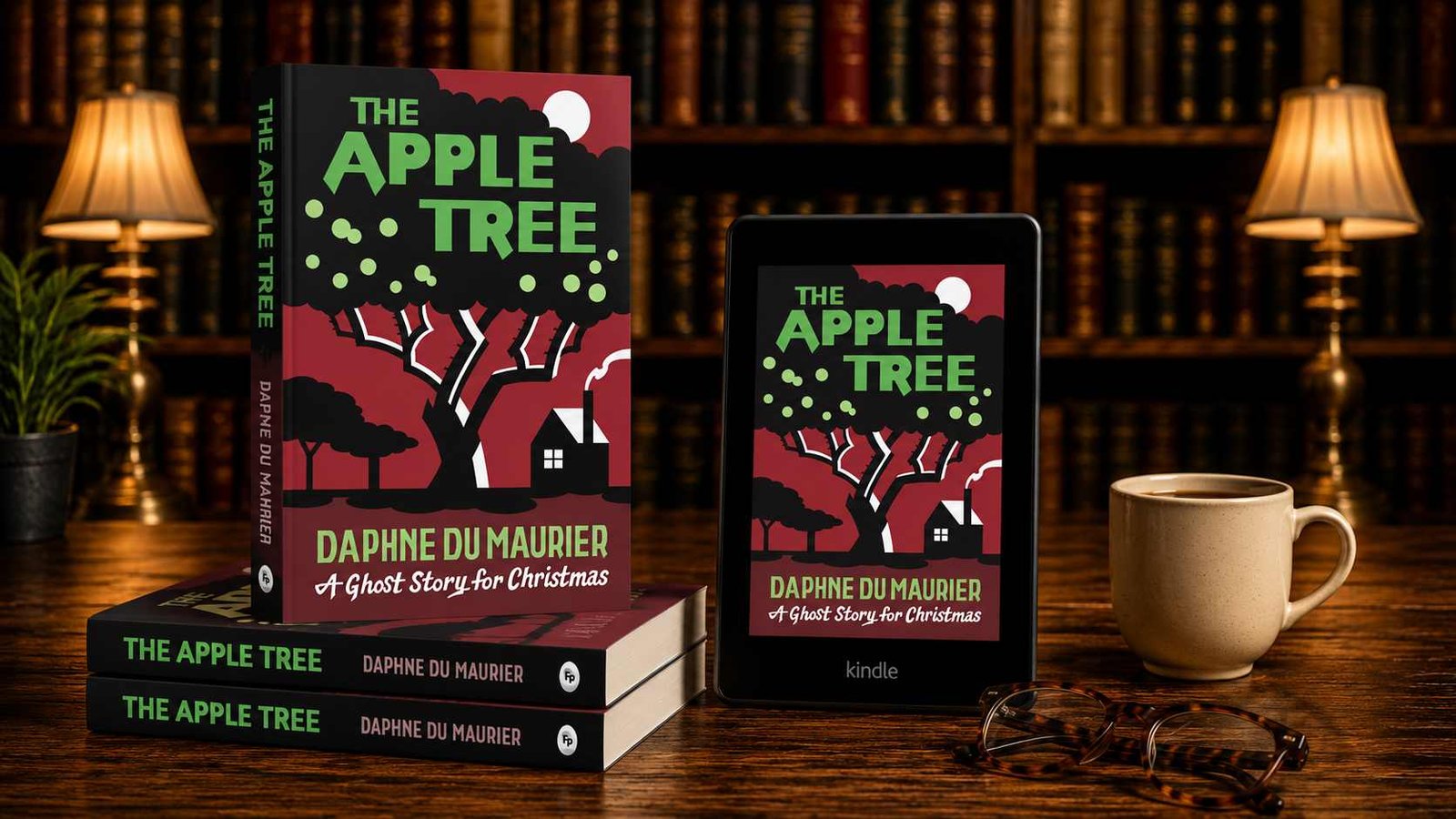
Some of the most unsettling stories begin with things we know well: a house, a garden, a marriage, a memory. The Apple Tree by Daphne du Maurier transforms these familiar elements into sources of quiet unease, revealing the darker corners of human nature through six haunting and psychologically charged stories.
Best known for Rebecca, Daphne du Maurier had a remarkable talent for creating suspense without relying on conventional horror. First published in 1952, The Apple Tree explores grief, obsession, guilt, desire, loneliness and the uncanny. Rather than filling her stories with obvious monsters and dramatic scares, du Maurier allows fear to emerge gradually, often leaving the reader uncertain about where reality ends and imagination begins.
The title story, “The Apple Tree,” is perhaps the collection’s most memorable tale. Following the death of his wife, a widower becomes increasingly fixated on an old apple tree in his garden. Its twisted branches and strange presence begin to assume an almost human quality, turning an ordinary part of the landscape into something deeply unsettling. The tree becomes a haunting reminder of his marriage, resentment and unresolved emotions. Whether the supernatural is truly at work or whether guilt has distorted his perception is left deliciously uncertain.
That ambiguity is central to The Apple Tree by Daphne du Maurier. Throughout the collection, the author finds horror in the psychological rather than the spectacular. In “The Blue Lenses,” perception itself becomes terrifying, while “The Little Photographer” explores desire, obsession and power through an increasingly disturbing relationship. Each story approaches darkness differently, but they share du Maurier’s fascination with the fragile boundary between what people believe and what may actually be true.
Just like Rebecca, The Apple Tree by Daphne du Maurier creates an atmosphere in which ordinary objects, familiar places and seemingly innocent encounters gradually acquire sinister meanings. The horror often lies not in what is revealed, but in what remains unexplained. And that’s peculiar about Daphne’s writing style that all readers would agree with.
For readers familiar with Daphne’s works, this collection offers another glimpse into du Maurier’s extraordinary imagination. Her characters are haunted not only by supernatural possibilities but by their own memories, desires and fears. The result is horror that feels intimate and deeply human.
The Apple Tree by Daphne du Maurier is a beautifully unsettling collection for anyone drawn to Gothic fiction, psychological suspense and classic supernatural storytelling. It does not scream for attention. Instead, it quietly plants a seed of unease and lets it grow long after the final page.
Buy the book now