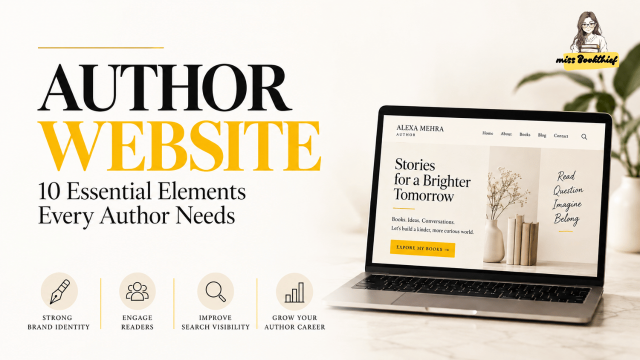
Your book may be the story you want readers to remember. Your author website is where readers discover the person behind it.
When someone Googles your name, what do they find? A professional website can give readers, media, event organisers and potential collaborators one reliable place to learn about you and your books.
But an effective author website needs more than a homepage and a biography. It should support your author brand, make your books easy to discover and guide visitors towards the next step.
10 essential elements every author website needs.
1. Start With a Strong Author Brand
Your website should immediately communicate who you are as an author and what you write.
Your colours, typography, photography, tone and imagery should feel consistent with your books and your wider author identity. A strong author brand makes the website memorable while helping readers understand what they can expect from your work.
2. Make Your Homepage Instantly Clear
Your homepage has one important job: tell visitors who you are, what you write and what they should do next.
Feature your latest or most important book, a concise introduction, a strong author photograph and a clear call to action. Avoid overwhelming visitors with every achievement, review and social media post at once.
Think clarity before decoration.
3. Keep Navigation Simple
Readers should not have to hunt for your books, biography or contact details.
A simple navigation menu could include:
Home | About | Books | Media | Blog | Contact
The exact structure can change depending on your career, but every important page should be easy to reach.
4. Give Every Book Its Own Page
Each book deserves more than a cover image and an Amazon link.
Create a dedicated page with the book description, cover, author information, reviews or endorsements, available formats and purchase links.
You can also include an excerpt, purchase links, interviews, and reviews. A dedicated book page gives readers enough information to decide whether the book is right for them.
5. Build an Author Funnel
Your author website should guide visitors somewhere. A reader might discover your website through Google, a social media post or an interview. From there, they should be able to move naturally towards your book, newsletter or other content.
For example:
Google → Author Website → Book Page → Newsletter → Reader
This turns your website from a static online profile into an active part of your book marketing strategy thus helping build a successful author brand.
6. Make SEO Part of Your Website Strategy
A beautiful author website is less useful if nobody can find it.
Use your author name, book titles, genres and relevant topics naturally throughout your website. Optimise page titles, headings, URLs, image alt text and meta descriptions.
You can also publish useful articles around your genre, writing expertise or book themes to create additional opportunities for search traffic direction.
7. Give Readers More Than a Sales Pitch
Your website should not feel like one long advertisement for your books. Consider sharing reading recommendations, writing insights, behind-the-scenes stories, interviews, event updates or resources connected to your work.
A blog can also help keep your website fresh and create additional content that readers can discover through search.
8. Create an About Page People Want to Read
Your About page is where readers meet the person behind the books.
Include a well-written biography, professional photograph, notable achievements and relevant personal details. If appropriate, add information about your writing journey, interests or the ideas that influence your work. Keep the writing engaging rather than turning the page into a résumé, and this can help boost your book sales as well as create a successful book marketing tool.
9. Build a Media and Press Section
If you have been featured in newspapers, magazines, podcasts, interviews or literary events, give those appearances a dedicated space.
A media page can include press coverage, interviews, photographs, awards, speaking information and downloadable media resources. This makes it easier for journalists, publishers, event organisers, and other professional contacts to understand your work and get the information they need.
10. Make Your Author Website your Online Hub
Your website should connect the different parts of your author platform.
Link your social media profiles, newsletter, books, media coverage, events and relevant external platforms back to your website. Social media can help people discover you, while retailer pages can help them purchase your book. Your author website brings those pieces together under one platform you control.
The goal is not to build the biggest website. It is to build one that makes it easy for the right readers to discover you, understand your work and take the next step.
Here are some great examples:


Final Thoughts
An author website is more than a digital business card. It is the online home of your author brand, giving readers a reliable place to discover your books, learn about your writing journey and stay connected with your work.
The most effective author websites are not necessarily the most elaborate. They are clear, easy to navigate, search-friendly and designed around what readers, media and industry professionals actually need.
Whether you are preparing to publish your first book or building a long-term writing career, investing in a thoughtful author website can give your author platform a strong foundation. Keep it updated, connect it to your wider book marketing efforts and make every page serve a clear purpose.
Your books tell readers what you write. Your website helps them discover who you are.
FAQs
1. What should an author website include?
At minimum, an author website should include a homepage, About page, book pages, contact information and clear links to purchase your books. Depending on your goals, you can also add a blog, newsletter signup, events page and media section.
2. Does every author need a website?
An author website is highly useful for building a professional online presence. It gives readers, media and event organisers one central place to find information about you and your books.
3. What should an author put on the homepage?
Your homepage should quickly communicate who you are, what you write and what visitors should do next. A strong author photograph, latest book, short introduction and clear call to action are useful starting points.
4. Should every book have its own page?
Yes. Giving every book a dedicated page allows you to provide its description, cover, reviews, formats and purchase links in one place. It can also create another opportunity for the book to appear in relevant search results.
5. Is a blog necessary for an author website?
Not necessarily. A blog is useful if you can publish genuinely helpful and relevant content consistently. An outdated blog can make a website appear inactive, so quality and consistency matter more than publishing frequently.
6. How does SEO help an author website?
SEO can help readers discover your website when they search for your name, books, genre or topics related to your work. Using relevant keywords, descriptive headings, useful content, internal links and properly optimised pages can improve discoverability.
7. Should an author have an email newsletter?
An email newsletter can be a valuable way to maintain a direct relationship with readers. Your website can encourage visitors to subscribe through strategically placed signup forms and relevant reader incentives.
8. What is an author media page?
An author media page is a professional resource for journalists, publishers, event organisers and other industry contacts. It can include your biography, photographs, interviews, press coverage, awards, book information and contact details.
9. Should an unpublished author have a website?
Yes, especially if you are actively building your author platform. An early website can establish your author identity and give readers a place to follow your writing journey before your first book is released.
10. How can an author website support book marketing?
Your author website can bring together your books, retailer links, newsletter, social media, reviews, media coverage, events and content. It can therefore become the central hub connecting the different parts of your book marketing strategy.