Writing the manuscript is only one part of writing a book. Before a manuscript reaches readers, it usually needs another pair of eyes. Sometimes it needs a light polish. Sometimes it needs substantial structural work. And sometimes the author knows that something is not quite working but cannot identify what it is.
That is where manuscript editing services in India can help.
Professional manuscript editing goes far beyond correcting spelling mistakes. Depending on the condition of the manuscript, an editor may work on structure, pacing, character development, narrative flow, clarity, consistency, language and style. Different stages of editing serve different purposes, so understanding what your manuscript actually needs is the first step to hiring a literary editor.
A useful way to think about the process is that developmental editing looks at the book as a whole, copy editing works at sentence level, and proofreading checks the final text for smaller errors.
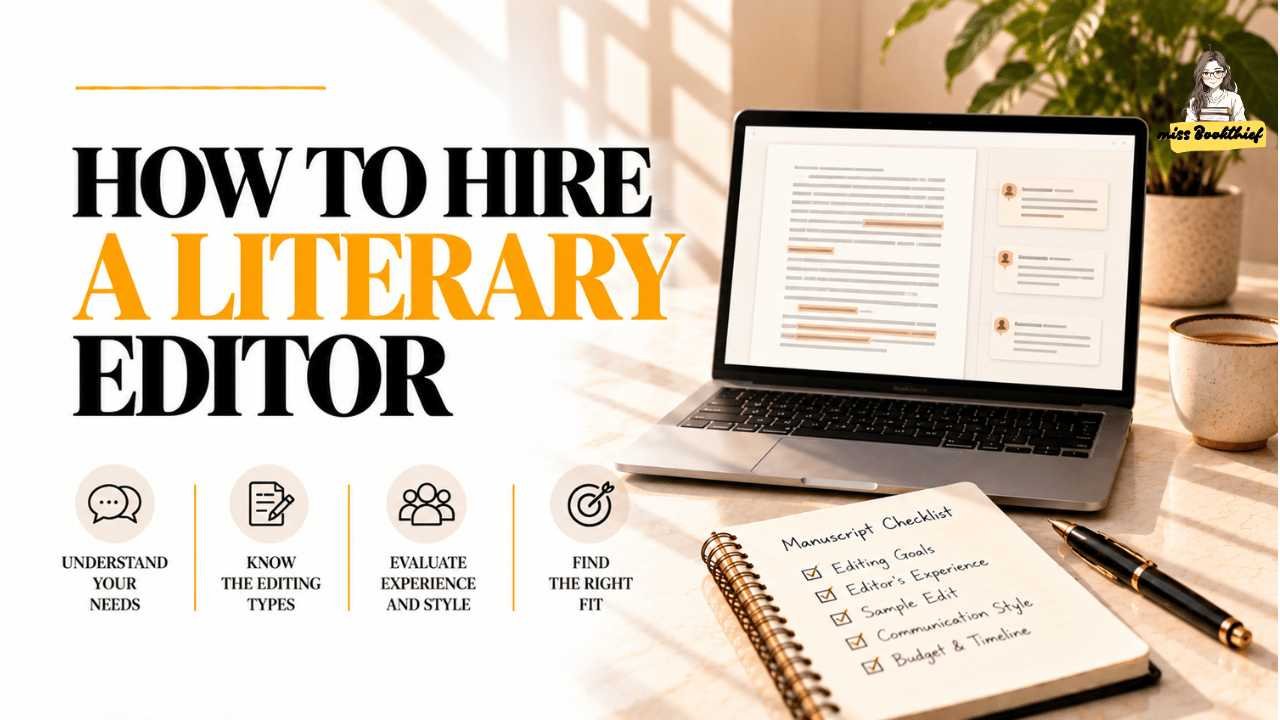
Now let’s look at the 10 things authors should remember while hiring a literary editor:
1. Know What Kind of Editing Your Manuscript Needs
Before hiring a literary editor, understand the major types of editing that comes under manuscript editing services.
Editorial assessment provides a high-level evaluation of the manuscript and identifies its strengths, weaknesses and areas that need attention.
Developmental editing focuses on big-picture elements such as structure, plot, characterisation, pacing, themes and the overall effectiveness of the book.
Copy editing works at sentence level, improving clarity, grammar, consistency, word choice and style.
Proofreading is generally the final quality check, focusing on smaller errors such as spelling, punctuation and formatting.
You may need one of these stages or several. The right choice depends on how developed your manuscript already is.
2. Do Not Assume Every Manuscript Needs a Full Edit
Professional editing is valuable, but not every manuscript needs the same amount of intervention, and that’s where companies providing professional editing services come into the picture.
If you have only completed your first draft, jumping straight into copy editing may be premature. Structural problems may still require substantial rewriting, meaning the carefully edited sentences could eventually be deleted or changed, and a skilled literary editor can help identify this.
Developmental editing should generally come before detailed copy editing because major structural changes can affect the wording throughout the manuscript. On the other hand, if your manuscript has already gone through several revisions and you are confident about its structure, you may need a copy edit rather than a developmental overhaul.
3. Developmental Editing Looks at the Big Picture
Developmental editing is particularly useful when the manuscript works in parts but does not yet work as a complete book.
For fiction, this can involve:
- Plot
- Character development
- Pacing
- Narrative structure
- Point of view
- Setting
- Themes
- Dialogue
- Narrative consistency
For nonfiction, developmental editing can involve:
- Argument
- Structure
- Chapter organisation
- Reader journey
- Repetition
- Supporting evidence
- Clarity of ideas
- Overall positioning
A developmental editor is not simply correcting sentences. They are examining whether the book itself is working.
If you keep thinking, “There is something wrong with this manuscript, but I don’t know what,” a developmental assessment may be more useful than proofreading, and hiring the right literary editor can help fix that.
4. Copy Editing Is About More Than Grammar
Copy editing is often misunderstood as grammar correction.
In reality, a good copy edit also considers clarity, consistency, sentence construction, word usage, repetition and the overall style of the manuscript.
For example, a literary editor may notice that a character’s name is spelled differently in different chapters, that a timeline does not remain consistent, or that the same idea has been repeated several times.
A copy editor should also improve the manuscript without unnecessarily replacing the author’s voice. The aim is to make the writing clearer and stronger while preserving what makes it yours.
5. Your Editor Should Understand Your Genre
A literary editor is not automatically the right editor for every book.
Editing a literary novel requires different sensibilities from editing a business book, memoir, children’s book, academic title or self-help book. A fiction editor should understand storytelling, characterisation, dialogue and pacing. A nonfiction editor may need stronger experience with argument, structure, research and factual consistency.
Genre familiarity can also help an editor understand what readers expect.
Therefore, when evaluating manuscript editing services in India, ask about the editor’s previous work and the types of books they regularly edit.
6. Your Voice Should Survive the Editing Process
One of the biggest concerns authors have about professional editing is losing their voice.
An editor should not turn every manuscript into something that sounds like the editor wrote it. If your prose is intentionally conversational, poetic, sparse, humorous or highly distinctive, the editor needs to understand that before making changes.
Good editing should make the writing more effective without making it generic.
7. Ask for a Sample Edit Before Hiring an Editor
A sample edit can tell you a great deal about whether an editor is right for your manuscript.
Ideally, provide a representative section rather than choosing only the easiest page in the book. Ask the editor to show you how they would approach it. Then look at the changes.
Are they improving clarity? Are they identifying genuine problems? Are they explaining their reasoning? Are they unnecessarily rewriting your sentences?
The purpose of a sample is not simply to count how many corrections the editor makes. It is to understand how the editor thinks.
8. Understand What You Are Actually Paying For
Manuscript editing fees can vary substantially because the scope of editorial work varies. An editorial assessment is different from a developmental edit. A developmental edit is different from copy editing. Proofreading is different again.
The quote may also depend on:
- Word count
- Genre
- Manuscript condition
- Editing level
- Language
- Complexity
- Research requirements
- Number of revision rounds
- Deadline
- Whether proofreading is included
This is why comparing two editing quotes based only on the total price can be misleading. A lower quotation may simply include less editorial work.
9. Ask About the Editing Process
Before hiring an editor or agency, ask how the project will actually be handled.
A professional proposal should ideally explain:
- Who will edit the manuscript
- What type of editing is included
- Whether comments will be provided
- Whether Track Changes will be used
- Whether an editorial report is included
- How many rounds of revisions are included
- Whether proofreading is separate
- What the estimated timeline is
- How feedback will be communicated
For developmental editing, authors should generally expect detailed feedback and suggestions for restructuring or rewriting rather than simply a manuscript covered in grammatical corrections.
10. Do Not Leave Editing Until the Last Minute
Editing takes time. This sounds obvious, but authors often approach editors when a publication deadline is already looming.
That creates unnecessary pressure for everyone involved.
A developmental edit can lead to significant rewriting. After those revisions, the manuscript may need another editorial pass, followed by copy editing and proofreading.
So if you are planning to publish in a particular month, work backwards. Give yourself enough time for:
Editing → Author revisions → Copy editing → Final corrections → Proofreading → Formatting → Publication
Trying to compress the entire process into a few days can compromise the quality of the final book.
FAQs
What are manuscript editing services?
Manuscript editing services help authors improve a book before publication. Depending on the service, editing can address structure, storytelling, language, clarity, consistency, grammar and final errors.
What type of editing does a manuscript need?
It depends on the manuscript’s condition. A developing manuscript may need an editorial assessment or developmental edit, while a nearly finished manuscript may need copy editing and proofreading.
What is developmental editing?
Developmental editing focuses on the big-picture elements of a manuscript, including structure, plot, characterisation, pacing, themes and overall reader experience.
What is copy editing?
Copy editing improves sentence-level clarity, grammar, punctuation, consistency, word usage and style while aiming to preserve the author’s intended voice.
Is proofreading the same as manuscript editing?
No. Proofreading is generally the final stage and focuses on smaller errors in spelling, punctuation and formatting. Manuscript editing can involve much broader changes to structure and language.
How much does manuscript editing cost in India?
The cost varies according to word count, genre, manuscript condition, editing level, language, deadline and editor experience. Authors should request a project-specific quotation.
Should I edit my manuscript before sending it to an editor?
Yes. You should generally revise your manuscript yourself before hiring a professional editor. The more developed the manuscript is, the more effectively you can use professional editorial input.
Can an editor change my writing style?
An editor may suggest changes to improve clarity and effectiveness, but a good editor should understand and respect the author’s intended voice rather than automatically imposing their own style.
Can AI replace a professional manuscript editor?
AI can assist with certain surface-level tasks, but it should not be treated as a substitute for professional editorial judgment, particularly for developmental and literary editing.
How do I choose a manuscript editing service in India?
Look at the editor’s experience, genre expertise, sample work, editing process, deliverables, revision policy and client feedback. Most importantly, make sure you understand exactly what type of editing is included.