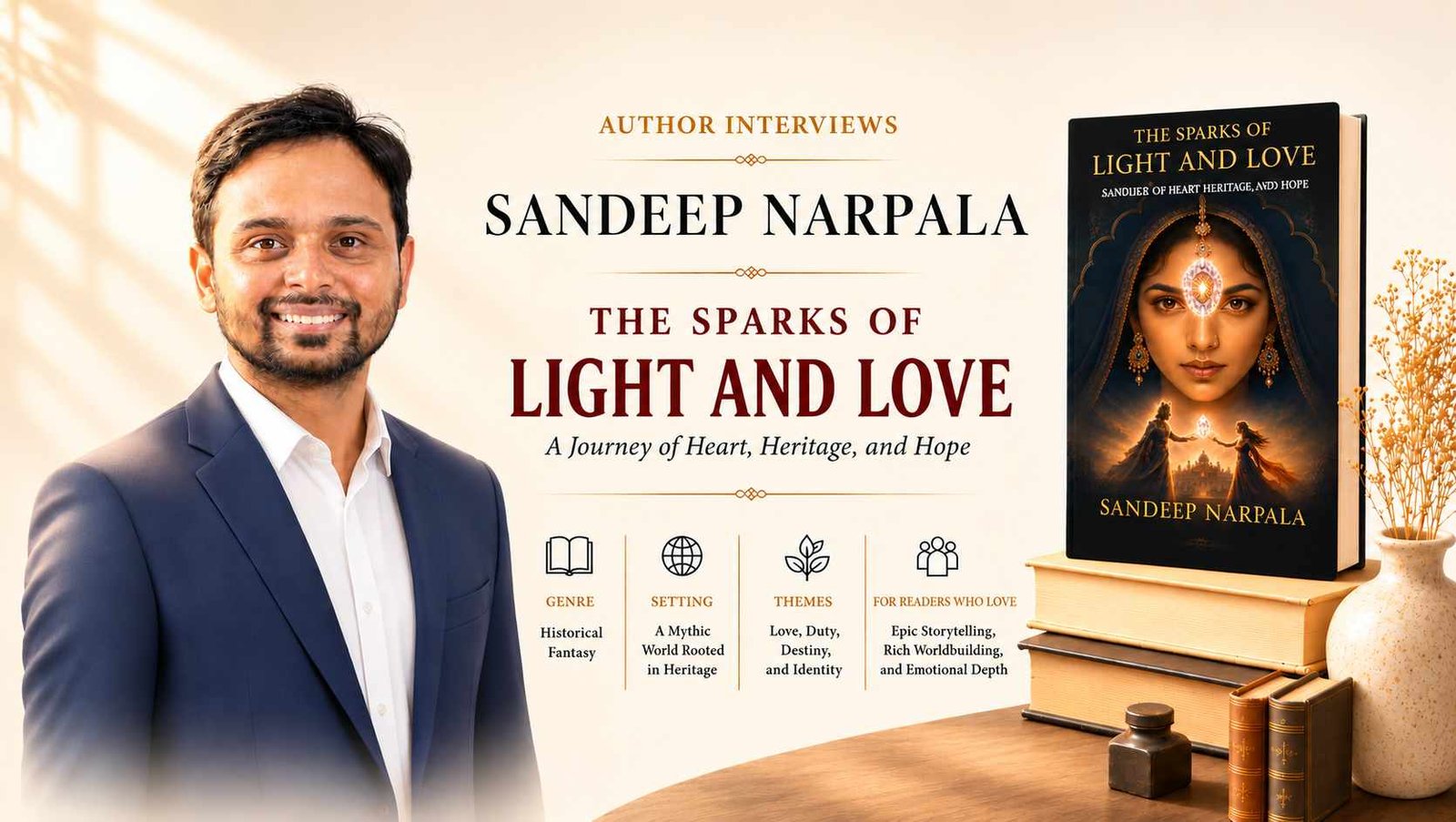
About the book
In the heart of London, the legendary Kohinoor diamond-the infamous symbol of colonial plunder-has just been stolen in a daring heist that sends shockwaves across the globe. At the center of this audacious crime is Prince, a brilliant gemologist with dual citizenship in India and the UK, whose life is entwined with the diamond’s turbulent past. Driven by a profound connection to his heritage and a deep love for Vajra, a gifted student with a mysterious bond to the Kohinoor, Prince faces the moral complexities of his actions.
As British authorities scramble to recover the stolen treasure, Prince finds himself ensnared in a web of international intrigue, strained diplomatic relations, and personal sacrifice. With each passing moment, the stakes rise, and Prince must navigate a treacherous landscape filled with authority figures like the relentless Detective Scott and the enigmatic Amarkesh Vitrodi, who harbors his own motives for retrieving the diamond. Caught between his academic integrity and the desperate need to save Vajra, whose health is inexplicably tied to the diamond, Prince concocts a plan to deceive the authorities and reclaim the Kohinoor.
But as secrets unravel and loyalties are tested, the line between right and wrong blurs, forcing Prince to confront the consequences of his choices. In a tale that weaves love, betrayal, and the quest for identity, Prince and Vajra embark on a journey that challenges the very nature of ownership and belonging. With the fate of the Kohinoor hanging in the balance, can they navigate a world steeped in history and injustice to reclaim not just a diamond, but their place in a story that is far larger than themselves? Join them as they uncover hidden truths and face the formidable challenges that threaten to tear them apart, leaving you spellbound until the very last page.

Read the full interview with Author Sandeep Narpala here:
- Can you tell us a little bit about your book? Why did you choose this genre and what’s the story behind the title?
The Sparks of Light and Love is a historical novel that blends romance, crime, and heritage around one of the most contested objects on earth: the Kohinoor diamond.
The Kohinoor has been stolen, and Prince Suryanarayana, a gemologist, is the prime suspect. The woman he loves, Vajra, is dying from visions of the diamond’s bloody past. Only one thing can save her and it may destroy them both.
I did not set out to write “historical romance” or “heist thriller.” I wanted a story that could hold India as it actually feels to me. I wanted everyone in India to talk about the Kohinoor again and this time, to keep talking until it comes back.
History gave me the diamond and the empires that claimed it. Romance gave me the reason a reader should care whether the prince saves Vajra. Crime gave me the engine. The title came last. Sparks are small. They are also how fires start. Light is what the diamond promises and what the visions steal. Koh-i-Noor means “Mountain of Light.” Love is the thing that refuses to stay in the past. Together they are the book: one spark, then another, until the story will not let you look away.
2. What inspired you to write this story? How did you find the resources and research material for your book?
I came across an NDTV headline in 2016 about the Kohinoor: India’s Prime Minister had asked for the diamond to be returned, and Britain’s Prime Minister declined, saying that if they started giving things away, Britain’s museums would be empty. That refusal stayed with me. I wanted to write a story about the Kohinoor, its history and its wound but as fiction: non-linear, contemporary, and alive.
Research meant reading the public record of the diamond: where it was mined, how it passed from one kingdom to another, the colonial seizure, and the long argument over its return. I talked every scene through with my wife, Bindhu, who has been the story’s first and hardest critic for nearly ten years. The novel is fiction. The hunger underneath it is not.
3. What was the most challenging aspect of writing this book? How did you overcome it?
Time, and courage. I wrote this book while holding a full scientific career and raising a family. Months and years went quiet. The harder challenge was courage. A story about a stolen empire-stone can become a lecture, a travelogue, or a costume drama. I did not want any of those. I wanted a human pulse in every chapter: two people who would still matter if the diamond vanished from the plot.
I finished it the unglamorous way. I knew I had a good story to tell, but I had no formal background in writing or literature, and that felt like a setback. With the tools now available technology and AI among them, I chose to use every help I could find to get the story onto the page. A neighbour gave me a gentle nudge. Bindhu gave me the encouragement to finish. I wrote it to inspire my daughters, Saanvika and Sanika, and my nephews. Perhaps one day they will write their own stories, and this book will have been one of the sparks.
4. Are there any particular authors or books that have influenced the book?
I am not an avid reader. I have only read a handful of books in my life. The writer whose style I have always liked is Chetan Bhagat: plain, fast, and meant to be finished.
This book is for the non-readers. It is short. It is easy to read. It is unpredictable, and it is meant to wake the imagination, not impress a literature class.
If I can do one more thing with it, I want to reach the storytellers who have never thought of themselves as readers or writers. If I could finish this with no literary background, they can tell their story too. That is the invitation.
5. What role did editing in the writing process? How did you decide when the manuscript was ready for publication?
Editing was not a last coat of paint. It was the second half of the writing. Early drafts were rough and crude with me trying to get the story in my head onto the page. Editing asked a colder question: does this line make the reader turn the page, or does it make the reader admire me? If it was the second, it went.
I knew the manuscript was ready when three things were true at once. The middle turn still surprised me. The last twist still hurt. And I could hand the book to a stranger without standing over their shoulder to explain it. Ready does not mean perfect. Ready means the story can walk into a room without me.
6. Do you have any upcoming projects or ideas for future books that you’d like to share with your readers?
This book took nearly a decade from the first spark of the story to publication. I am not rushing the next one. I have two other stories in mind, but I went ahead with The Sparks of Light and Love because I believed it was my strongest story to put into the world first.
7. In the age of digital publishing and social media, how do you engage with your readers and promote your work?
Slowly, and in my own voice. I share the work on Instagram at @sandeepnarpala, not as a content machine, but as a place where the people who watched this book being built can watch it go out into the world. I would rather have fifty readers who finish the last page than five thousand who only like a cover graphic.
The book is available on Amazon worldwide, and on Ziffy Bees and Flipkart in India. I am asking the first circle – family, old school friends, anyone who has ever said, “When is the book coming?” to buy it, read it, and leave an honest review. A debut lives on those early reviews. Beyond that, I am working with independent book marketers in India and planning a small launch gathering in Frederick, Maryland, where I live. I do not believe a novel is promoted. I believe it is introduced, one reader at a time.
8. How do you balance your writing career with other aspects of your life, such as work and family?
Imperfectly, and on purpose. Science is my profession. Storytelling is the new unknown passion, I could not put down. Family is the reason both are worth doing. Bindhu did not only encourage the book. She argued with it. That is a different kind of love, and it is in the pages.
Balance, for me, is not a timetable. It is a decision about what gets the best hour of the day instead of the leftover one. Some seasons the lab won. Some seasons the manuscript did. The only rule that survived ten years is this: do not make the people who love you compete with the book. Make the book worthy of the hours they already gave you.
9. What do you intend your readers to takeaway from your book?
I want readers to feel that history is not behind us. It is sitting at the table. I want them to finish the last chapter and sit still for a minute, not only because the plot has resolved, but because our heritage should not be lost, and this generation and the next should know it. I want people to start talking about the Kohinoor again, and about where it belongs.
There is a second takeaway that lives outside the fiction. A portion of what this book earns will support people living with Sialidosis, a rare inherited condition that most readers will never have heard of. Families who live with it carry medical, emotional, and financial weight with almost no public attention. If the novel entertains you, good. If it also sends a little light toward people who have been left in the dark, better. That is the hope in the subtitle: heart, heritage, and hope not as decoration, as work.
10. What’s the one advice you’d like to share with aspiring writers of the genre?
This is not only for writers in this genre. It is for every aspiring writer: do not wait for permission, and do not let anyone discourage you from telling your story. Start writing. Get the thoughts onto the page first. Then find the right team – editor, publisher, and marketing team.
The other advice is less literary and more true. Finish. Ten years taught me that talent is common and finished manuscripts are not. Protect the hours. Find one reader who will tell you the truth. Cut the sentence you love if it does not serve the page. Then send the book into the world before you have explained it to death. The reader will do the rest.
Buy your copy now: Amazon