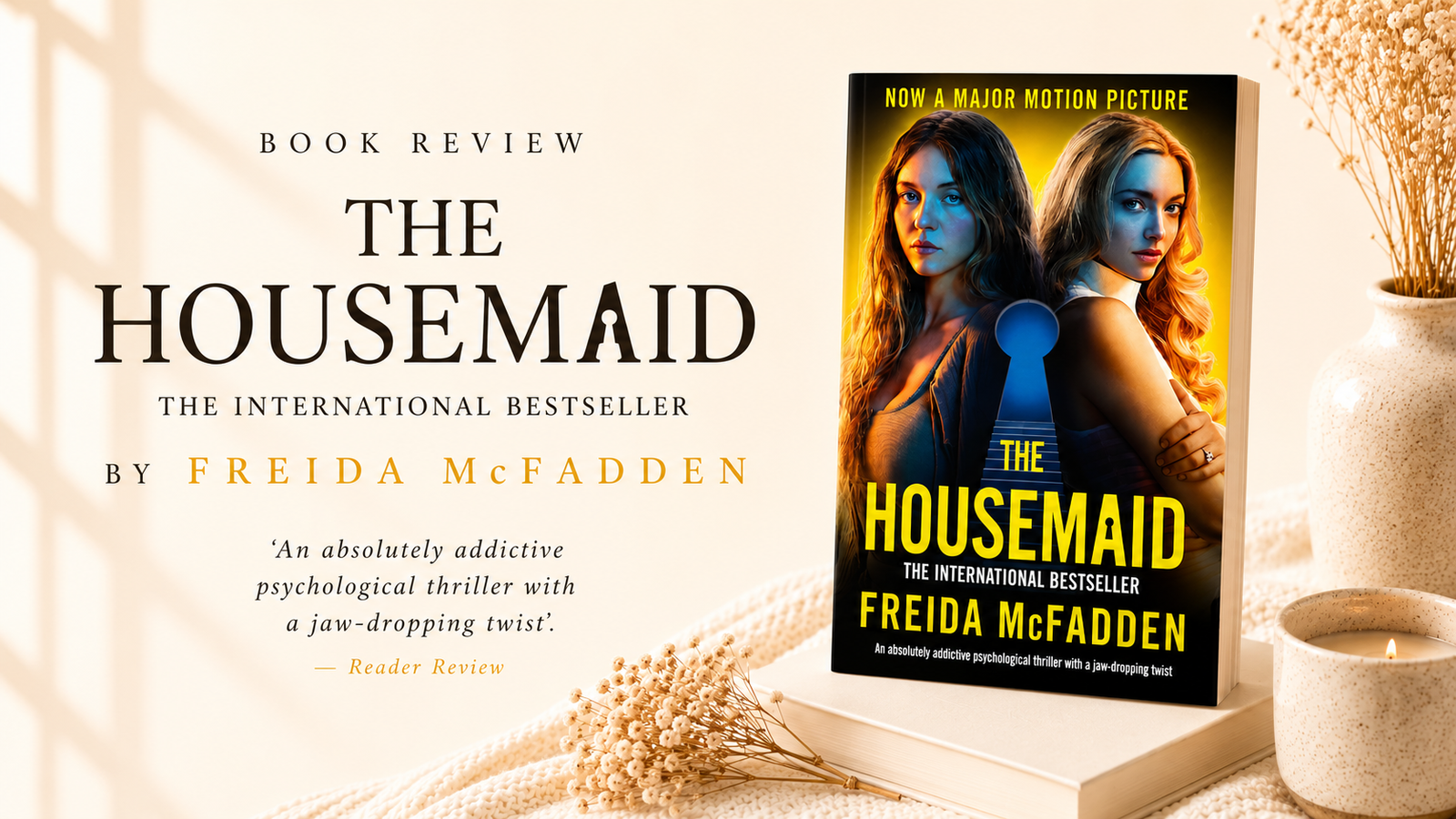
There is a reason The Housemaid by Freida McFadden has become one of the most talked about psychological thrillers on BookTok, Bookstagram, and reading communities around the world. With razor sharp pacing, unreliable characters, and twists that constantly force readers to rethink what they know, Freida McFadden delivers a novel that thrives on manipulation and misdirection. At its core, however, The Housemaid is more than a page turner. Beneath the shocking reveals lies a story about power, survival, appearances, and the dangerous assumptions we make about the people behind closed doors. In this post, we shall find out why ‘The Housemaid’ by Freida McFadden became an instant bestseller and one the best thrillers of all time.
Plot Summary of ‘The Housemaid’ by Freida McFadden
Millie Calloway desperately needs a fresh start. After struggling to rebuild her life, she accepts a live in housekeeping position with the wealthy Winchester family, believing it offers stability and a chance to leave her troubled past behind. Initially, the arrangement seems almost too good to be true. Nina Winchester appears unpredictable and emotionally volatile, Andrew Winchester comes across as charming and supportive, and their luxurious home promises security Millie has not known for years.
However, strange incidents quickly begin to accumulate. Nina’s erratic behavior grows increasingly disturbing, the atmosphere inside the house becomes suffocating, and the small attic bedroom assigned to Millie raises unsettling questions of its own. As hidden motives surface and loyalties shift, Millie realises that nothing inside the Winchester household is quite what it seems. Every revelation overturns previous assumptions, drawing readers into a psychological game where victim and villain constantly exchange places.
Review of ‘The Housemaid’ by Freida McFadden
At first glance, The Housemaid feels like a familiar domestic thriller built around wealthy families, hidden secrets, and unreliable narrators. As the story unfolds, however, Freida McFadden repeatedly subverts reader expectations by carefully manipulating perspective and withholding crucial information until precisely the right moment.
Rather than relying solely on shocking twists, McFadden constructs suspense through mounting unease. The claustrophobic atmosphere inside the Winchester home, coupled with Millie’s growing uncertainty about whom to trust, creates tension that intensifies with every chapter. Moreover, the novel’s brisk pacing makes it exceptionally difficult to put down. Short chapters and strategic cliffhangers encourage “just one more chapter” until readers find themselves racing toward the conclusion in a single sitting.
What truly distinguishes the book, however, is its willingness to challenge first impressions. Characters who initially appear sympathetic become suspect, while others reveal unexpected depths. Consequently, the novel rewards readers who remain sceptical of every narrative presented. Although some plot developments require a suspension of disbelief, McFadden’s confident storytelling ensures that entertainment consistently takes precedence over realism.
Characters Analysis in ‘The Housemaid’ by Freida McFadden
Millie Calloway
Millie serves as an immediately engaging protagonist whose difficult past informs her cautious approach to the present. Intelligent, observant, and quietly resourceful, she navigates unfamiliar territory while constantly weighing whom she can trust. Importantly, McFadden avoids portraying Millie as flawless. Her vulnerabilities and questionable decisions make her feel authentic and heighten the emotional stakes throughout the novel.
Nina Winchester
Nina initially appears unstable, unpredictable, and impossible to understand. Her increasingly bizarre behaviour creates much of the novel’s early suspense. Yet as additional layers emerge, readers are encouraged to reconsider nearly everything they assumed about her. McFadden skillfully uses Nina to demonstrate how appearances can conceal far more complicated realities.
Andrew Winchester
Charming, successful, and outwardly composed, Andrew embodies the polished exterior that often masks darker truths within domestic thrillers. His carefully controlled persona contributes significantly to the novel’s atmosphere of uncertainty. Without revealing spoilers, his role becomes increasingly central as the narrative progresses.
Setting & Themes in ‘The Housemaid’ by Freida McFadden
Almost the entire novel unfolds within the Winchester residence, transforming the seemingly luxurious home into one of the story’s most effective psychological devices. Its elegant rooms project wealth and perfection, yet hidden spaces, locked doors, and subtle restrictions gradually reveal an environment built on secrecy and control. Consequently, the house itself becomes a metaphor for appearances that conceal uncomfortable truths.
Throughout the novel, McFadden explores themes including:
- Manipulation and deception
- Power imbalances within relationships
- Class and economic vulnerability
- Trust and betrayal
- Survival through reinvention
- Public appearances versus private realities
- The consequences of underestimating others
These themes elevate the novel beyond simple entertainment, encouraging readers to question assumptions about morality and victimhood.
Writing Style in ‘The Housemaid’ by Freida McFadden
Freida McFadden writes with remarkable efficiency. Her prose is straightforward, fast paced, and intentionally designed to maximise suspense rather than literary flourish. Furthermore, she structures chapters to end on compelling revelations or unanswered questions, maintaining momentum throughout the novel. This cinematic pacing makes The Housemaid especially appealing to readers seeking an addictive reading experience.
While the language remains accessible, McFadden demonstrates considerable skill in controlling information. She reveals only enough to sustain curiosity while reserving major twists for moments of maximum impact. As a result, even experienced thriller readers may find themselves surprised by the direction the story ultimately takes.
Strengths and Weaknesses
Strengths
- Exceptionally fast paced and addictive
- Multiple well executed plot twists
- Strong use of unreliable perception
- Memorable domestic setting
- Highly accessible writing style
Weaknesses
- Some twists rely on coincidence or dramatic timing
- Secondary characters receive limited development
- Readers seeking literary subtlety may prefer more nuanced psychological fiction
Who Should Read The Housemaid?
This novel is perfect for readers who enjoy:
- Psychological thrillers
- Domestic suspense
- Books with shocking twists
- Fast paced contemporary fiction
- Unreliable narrators
- Locked room style tension
- BookTok favourites
Fans of Lisa Jewell, Alice Feeney, B.A. Paris, Gillian Flynn, and Lucinda Berry will likely devour The Housemaid.
Final Verdict
The Housemaid succeeds because it understands that the best psychological thrillers keep readers emotionally invested while constantly shifting the ground beneath their feet. Freida McFadden combines relentless pacing with carefully engineered surprises, delivering a novel that remains entertaining from its opening pages to its final reveal.
Even when certain developments stretch plausibility, the sheer momentum of the storytelling makes resistance almost impossible. If you’re searching for a compulsively readable thriller packed with secrets, deception, and satisfying twists, The Housemaid is likely to keep you awake far later than planned.

Frequently Asked Questions (FAQs)
Is The Housemaid worth reading?
Yes. It is an addictive psychological thriller known for its fast pacing, shocking twists, and highly entertaining narrative.
Is The Housemaid scary?
Rather than relying on horror, the novel builds suspense through psychological tension, manipulation, and uncertainty.
What genre is The Housemaid?
It is a psychological thriller and domestic suspense novel.
Is The Housemaid suitable for beginners to thrillers?
Absolutely. Its accessible writing style and gripping plot make it an excellent entry point into the psychological thriller genre.
Why is The Housemaid so popular?
Its combination of short chapters, constant twists, unreliable characters, and binge worthy pacing has made it a viral sensation among thriller readers.