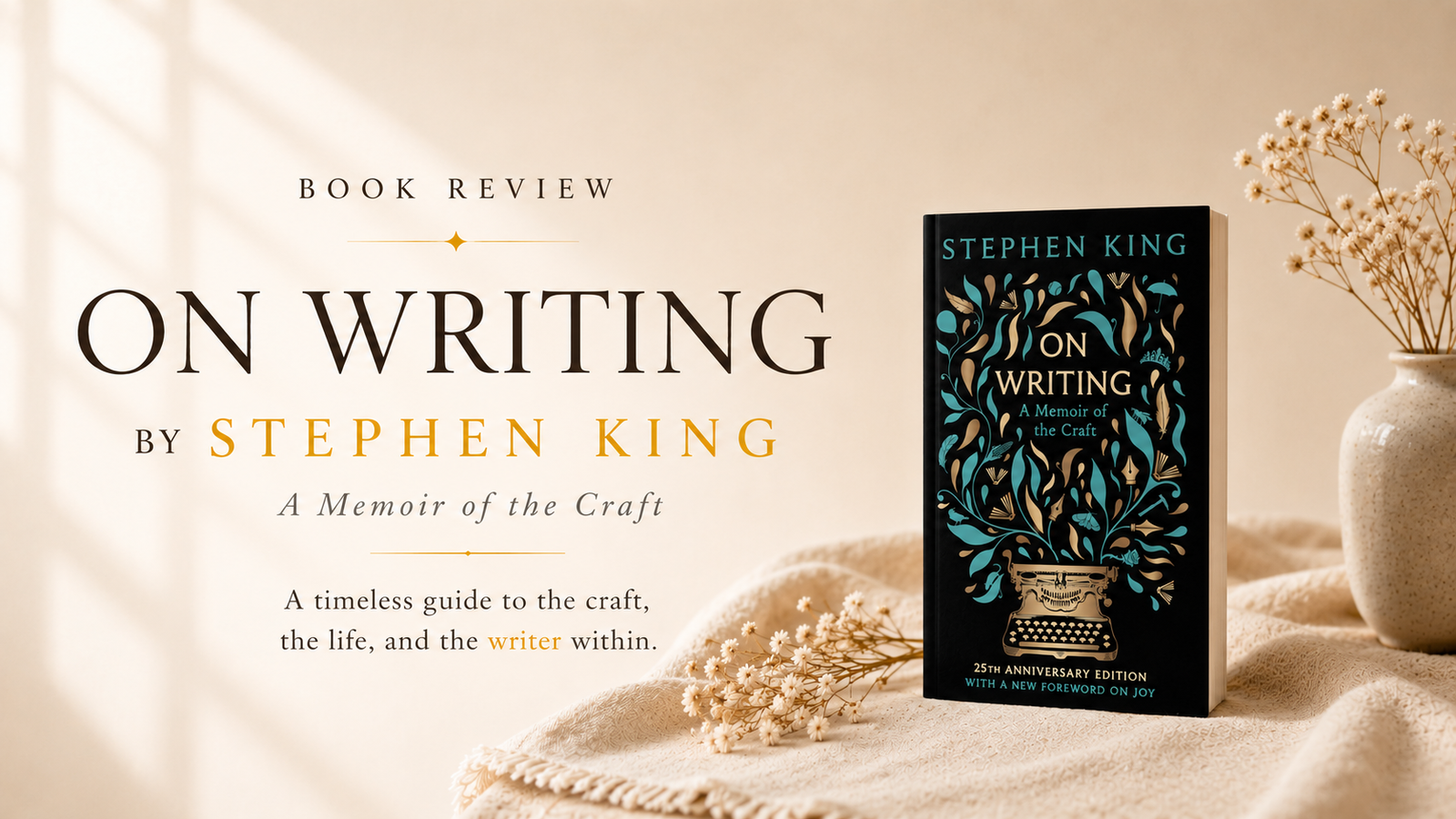
On Writing by Stephen King: Book Review & Analysis
There are countless books that promise to teach you how to write, but very few continue to inspire readers decades after publication. On Writing: A Memoir of the Craft by Stephen King belongs to that rare category. Part autobiography and part writing guide, it offers practical lessons wrapped in deeply personal stories about failure, persistence, creativity, and second chances. Whether you’re an aspiring novelist, a blogger, a journalist, or simply someone fascinated by the creative process, this book feels less like a lecture and more like a heartfelt conversation with one of the world’s most successful storytellers. Here’s why this book remains one of the best Stephen King books ever.
Plot Summary of On Writing by Stephen King
Unlike a conventional writing manual, On Writing unfolds in two distinct parts. The first invites readers into Stephen King’s life, tracing his childhood, early struggles, rejection letters, financial hardships, and eventual rise as one of the world’s most celebrated authors. Rather than presenting a polished success story, King recounts the uncertainty, setbacks, and determination that shaped his career.
The second half shifts its focus to the craft itself. Here, King shares practical advice on vocabulary, editing, dialogue, storytelling, and the importance of discipline, often drawing examples from his own writing journey. Woven throughout is the remarkable account of the devastating accident that nearly ended his life and the resilience that brought him back to the page.
The result is far more than a handbook. It is an intimate reflection on creativity, perseverance, and the lifelong commitment that writing demands.
Review of On Writing by Stephen King
At first glance, On Writing appears to be a guide for aspiring authors. As the pages unfold, however, it becomes clear that Stephen King has created something much broader and more meaningful. Equal parts memoir and masterclass, the book explores not only how stories are written but also why people feel compelled to tell them in the first place.
Rather than offering rigid formulas or guaranteed shortcuts, King champions curiosity, consistency, and honesty. Throughout the book, he argues that strong writing grows from extensive reading, disciplined practice, and a willingness to revise without ego. Consequently, his advice feels grounded in lived experience rather than abstract theory.
What makes the book especially memorable is its conversational tone. King writes as though he is sitting across the table sharing stories over coffee, making even technical discussions about grammar or editing feel approachable and engaging. His humour, candour, and self awareness transform what could have been a dry instructional manual into an absorbing narrative.
Perhaps most importantly, On Writing quietly dismantles the myth of overnight success. Through stories of rejection slips pinned to his bedroom wall, financial struggles, addiction, and personal tragedy, King reminds readers that persistence often matters more than talent.
Stephen King as Narrator
Stephen King emerges as an unusually honest narrator. He openly discusses mistakes, insecurities, addictions, and failures without trying to polish his legacy or position himself as an unquestionable authority.
Instead, he approaches readers with humility and directness. Even when expressing strong opinions about writing, he presents them as lessons learned through decades of experience rather than universal truths. As a result, the book feels encouraging instead of intimidating.
His authenticity is ultimately what makes the memoir sections so compelling. Readers don’t simply learn about writing. They witness the life experiences that shaped one of modern literature’s most prolific voices.
Although On Writing focuses on storytelling, its lessons extend far beyond the literary world. King’s reflections on discipline, resilience, self belief, and creative integrity resonate with anyone pursuing meaningful work.
Throughout the memoir, he repeatedly suggests that inspiration alone is unreliable. Instead, meaningful progress comes from establishing habits, embracing revision, and returning to the work day after day.
This philosophy gives the book a universal appeal. Even readers with no intention of publishing a novel can draw valuable lessons about perseverance, craftsmanship, and lifelong learning.
Writing Style in On Writing by Stephen King
Interestingly, Stephen King practices exactly what he preaches. His prose remains clean, direct, and remarkably free of unnecessary ornamentation. He values clarity over complexity and storytelling over stylistic excess.
Moreover, the structure balances memoir and instruction with impressive ease. Personal anecdotes transition naturally into practical advice, while moments of humour soften discussions of failure, addiction, and recovery.
Rather than overwhelming readers with technical jargon, King illustrates principles through concrete examples and memorable stories. Consequently, even beginners will find his lessons accessible without feeling oversimplified.
Themes in On Writing by Stephen King
Several recurring themes shape the book’s message:
- The importance of discipline over fleeting inspiration
- Reading as the foundation of becoming a better writer
- Revision as an essential part of the creative process
- Honesty and authenticity in storytelling
- Persistence in the face of rejection and failure
- The lifelong pursuit of improvement
Strengths and Weaknesses
What Works Well
- A seamless blend of memoir and writing instruction
- Honest, conversational, and highly readable prose
- Practical advice that remains relevant decades later
- Deeply motivating reflections on perseverance
- Valuable insights for writers at every stage
Potential Drawbacks
- Experienced authors may already know parts of the technical advice
- Readers expecting a textbook may be surprised by how memoir driven the book is
Who Should Read On Writing by Stephen King
This book is an excellent choice for:
- Aspiring novelists
- Creative writing students
- Bloggers and content creators
- Journalists and copywriters
- Fans of Stephen King’s fiction
- Readers interested in creativity and personal growth
Even those who never plan to write professionally may appreciate its reflections on discipline, resilience, and finding purpose through meaningful work.
Final Verdict
On Writing succeeds because it refuses to separate the writer from the writing. Stephen King demonstrates that memorable stories emerge not from secret formulas or extraordinary talent alone but from curiosity, relentless practice, and the courage to keep improving. Honest, insightful, and deeply personal, this is more than a book about writing. It is a reminder that every creative pursuit begins with showing up, putting in the work, and trusting that small efforts accumulate into something remarkable.
If you have ever wanted to write or simply wondered how unforgettable stories come into existence, this is one book you will return to again and again.
Buy your copy of ‘On Writing: A Memoir of the Craft’

Frequently Asked Questions
Is On Writing by Stephen King worth reading?
Absolutely. It combines memoir and practical writing advice in a way that feels engaging, inspiring, and genuinely useful for writers and readers alike.
Is On Writing suitable for beginners?
Yes. King’s conversational style and straightforward guidance make it one of the best entry points for anyone interested in learning the craft of writing.
Do you need to be a writer to enjoy On Writing?
Not at all. The memoir sections, personal stories, and reflections on perseverance make it an enjoyable and meaningful read even for people who never plan to publish a book.
What can you learn from On Writing?
Readers will find practical lessons on storytelling, editing, vocabulary, revision, discipline, and the importance of reading widely, alongside valuable insights into Stephen King’s creative process.
Is On Writing more memoir or writing guide?
It strikes a thoughtful balance between both. The first half explores King’s personal journey, while the second focuses on practical lessons about writing and storytelling.