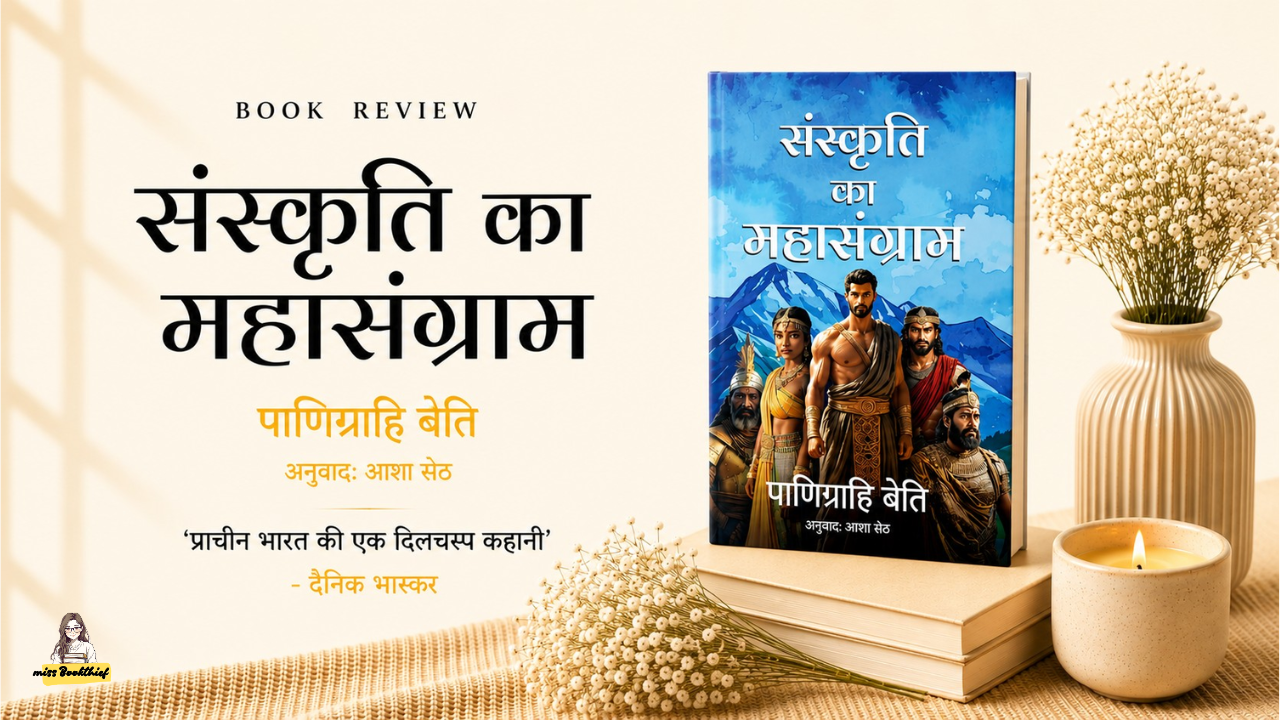
Set against the backdrop of ancient India, Sanskriti Ka Mahasangram unfolds as an ambitious historical saga that intertwines politics, philosophy, warfare, and human relationships. Rather than recounting history through dates and dynasties, Panigrahi Bethi reconstructs a civilization in transition, where competing ideologies, cultural identities, and personal loyalties shape the course of events.
As kingdoms rise and alliances fracture, the novel follows a diverse cast of rulers, thinkers, warriors, and ordinary individuals whose lives become inseparable from larger questions of power and cultural survival. The conflicts extend beyond the battlefield, entering courts, households, and minds, where every decision carries political and emotional consequences. At its core, the novel asks whether civilizations endure through conquest alone or through the ideas and values they choose to preserve.
Review of Sanskriti Ka Mahasangram
Historical fiction often struggles to balance authenticity with storytelling, but Sanskriti Ka Mahasangram approaches the genre with remarkable ambition. Instead of merely dramatizing historical events, Panigrahi Bethi uses the past to examine timeless questions about identity, governance, faith, and social change.
From the opening chapters, the narrative creates a vivid sense of scale. Political intrigue unfolds alongside intimate human moments, while philosophical debates coexist with action and emotional conflict. Consequently, the novel feels both expansive and deeply personal. At the same time, it avoids presenting history as a simple struggle between heroes and villains. Characters frequently operate in moral grey areas, making choices driven by duty, ambition, love, or survival. This complexity gives the narrative greater credibility and encourages readers to engage critically with its ideas. Rather than rushing through major events, the author allows cultural and ideological tensions to build gradually, creating a story that rewards patience and reflection.
All these factors contribute to why the book has crossed 1 Billion+ readers in both Hindi and English reading communities.
Character Analysis in the Historical Fiction Novel
The Leaders and Strategists
The rulers and political figures carry the burden of shaping history while confronting their own vulnerabilities. Their decisions influence kingdoms, yet many remain haunted by personal dilemmas and conflicting loyalties.
The Philosophers and Thinkers
Equally significant are the intellectual voices scattered throughout the novel. Through dialogue and debate, they challenge prevailing beliefs and expand the story beyond military conflict, inviting readers to reflect on the deeper meaning of civilization itself.
The Ordinary People
Perhaps the novel’s greatest strength lies in its attention to everyday lives. Merchants, families, soldiers, and common citizens remind readers that cultural transformations ultimately affect individuals as much as empires.
Setting & Themes in Sanskriti Ka Mahasangram
The ancient Indian setting provides more than historical context. It actively shapes the narrative through its cities, courts, trade routes, rituals, and evolving social structures. Throughout the novel, Bethi explores themes that remain relevant today:
- Cultural identity and preservation
- Political power and responsibility
- Tradition versus transformation
- Love and loyalty during conflict
- Philosophy as a force for social change
- The enduring influence of history on the present
Writing Style in Sanskriti Ka Mahasangram
Panigrahi Bethi adopts a measured and immersive narrative style that complements the novel’s historical scope. The prose remains descriptive without becoming overwhelming, allowing readers to visualize both grand political settings and quieter personal moments. Meanwhile, the dialogues carry philosophical weight, reflecting the ideological debates that drive much of the story. Although the narrative occasionally slows to explore historical or cultural details, these sections enrich the world building rather than interrupt it. The Hindi translation by Asha Seth preserves much of the novel’s literary texture while remaining accessible to contemporary readers.
Strengths and Weaknesses
Strengths
- Richly imagined historical setting
- Thought provoking exploration of culture and civilization
- Nuanced political and philosophical themes
- Strong balance between personal stories and large scale events
- Detailed world building rooted in ancient India
Weaknesses
- Deliberate pacing may feel slow for readers seeking constant action
- The large cast of characters requires careful attention
- Philosophical discussions occasionally overshadow narrative momentum
Who Should Read Sanskriti Ka Mahasangram?
This novel will appeal to readers who enjoy:
- Historical fiction rooted in Indian history
- Epic political dramas
- Character driven narratives
- Philosophy and cultural discourse
- Literary fiction with historical depth
- Stories that combine history with emotional complexity
Readers who appreciated works like Chanakya’s Chant, The Palace of Illusions, or The Covenant of Water may find this novel especially rewarding.
Final Verdict for Sanskriti Ka Mahasangram
Sanskriti Ka Mahasangram offers more than a retelling of the past. It invites readers to reflect on the forces that shape civilizations and the individuals who live through periods of profound transformation. By blending history with philosophy, politics, and deeply human conflicts, Panigrahi Bethi crafts a novel that encourages contemplation as much as immersion. For readers seeking historical fiction that values ideas as highly as spectacle, this is a rewarding and intellectually engaging read.
Buy your copy of ‘Sanskriti ka Mahasangram’ now

FAQs
Q1. Is Sanskriti Ka Mahasangram worth reading?
Yes. It is an engaging work of historical fiction that combines politics, philosophy, and cultural exploration with compelling storytelling.
Q2. What genre is Sanskriti Ka Mahasangram?
The book is primarily historical fiction with elements of political drama, literary fiction, and philosophical discourse.
Q3. What are the main themes of Sanskriti Ka Mahasangram?
The novel explores cultural identity, governance, social transformation, loyalty, tradition, and the enduring impact of history.
Q4. Is Sanskriti Ka Mahasangram based on real history?
While presented as a work of fiction, the novel draws significant inspiration from ancient Indian history, culture, and historical thought.
Q5. Who should read Sanskriti Ka Mahasangram?
It is well suited for readers interested in Indian historical fiction, civilizational narratives, and stories that combine intellectual inquiry with emotional depth.