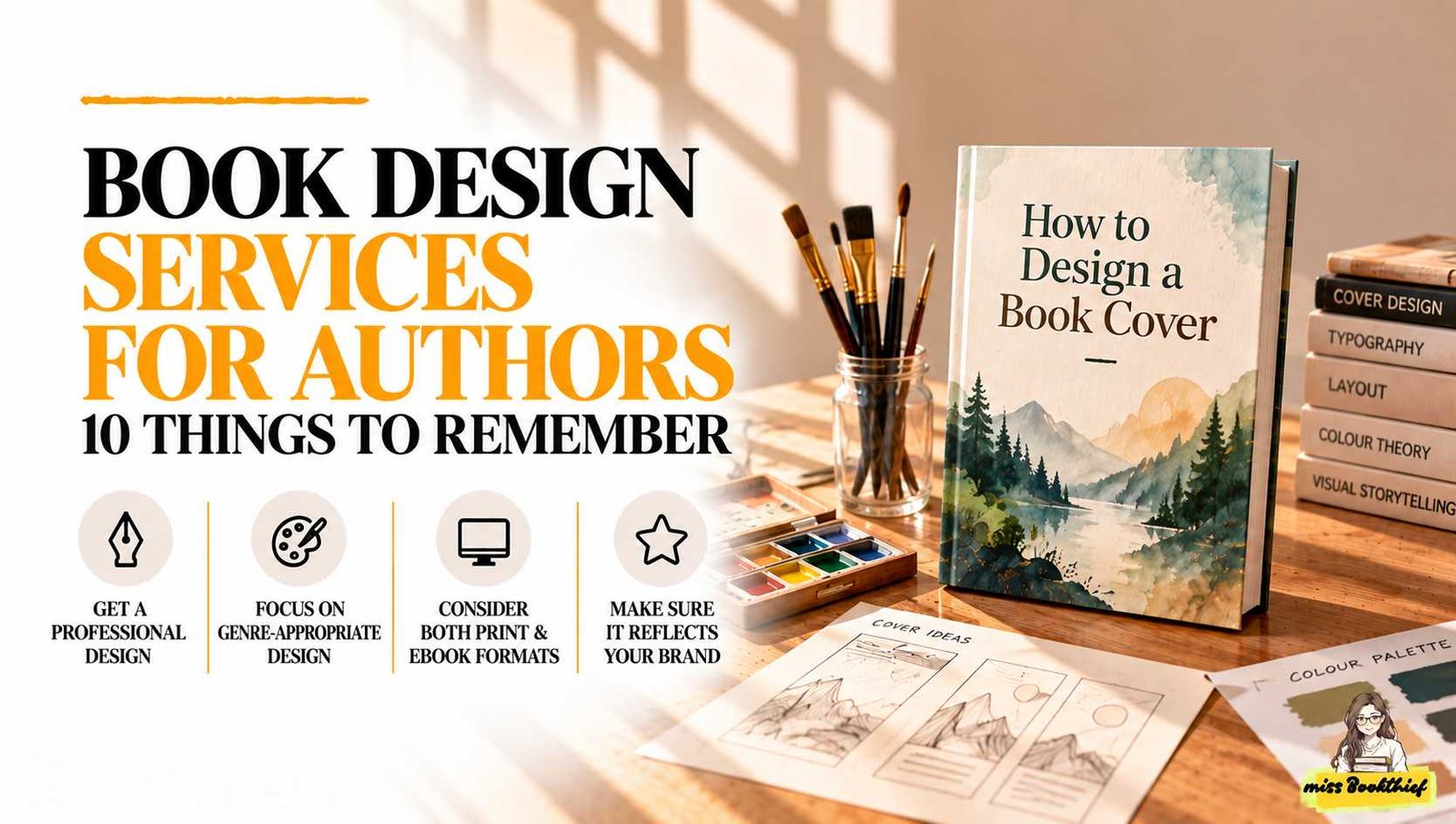
A book begins with words, but readers experience much more than words when they pick up a finished book. It’s the cover! The cover creates the first impression, typography influences readability, page layout shapes the reading experience, and even small details such as spacing, margins, and chapter openings contribute to how professional a book feels. That’s why book design services are so crucial.
For authors, particularly those publishing independently, book design is therefore more than making a manuscript look attractive. It is about translating the content into a finished book that feels appropriate for its genre, audience, format, and purpose. Whether you are preparing a novel, memoir, poetry collection, children’s book, or nonfiction title, professional book design services can help turn a manuscript into a polished publication.
Here are ten things authors should understand before choosing book design services.
1. Understand What Book Design Actually Includes
Book design is a broad term. It can include cover design, interior formatting, typography, layout, illustrations, typesetting, image placement, and preparation of files for print or digital publication. Depending on the project, an author may need all of these services or only a few.
Therefore, begin by understanding what your book actually requires. A straightforward novel may primarily need professional cover design and interior typesetting, while a cookbook, children’s book, poetry collection, or illustrated nonfiction title may require considerably more visual planning.
The right design process begins with the content itself. Instead of treating every book as a template, a professional designer should consider how the structure and purpose of the manuscript should influence its final presentation.
2. Your Book Cover Is a Marketing Tool
Your cover is often the first thing a potential reader sees. It appears on online bookstores, social media posts, advertisements, websites, book reviews, and promotional materials. Consequently, it needs to work not only as a piece of design but also as part of your book’s marketing strategy.
A strong cover should communicate the book’s genre, tone, and audience while remaining visually effective at different sizes. This matters particularly online, where a cover may initially appear as a small thumbnail among dozens of other books.
However, an attractive cover is not necessarily an effective cover. A design can be beautiful while communicating the wrong genre or attracting the wrong audience. Professional book cover design should therefore balance creativity with positioning and reader expectations.
3. Genre Matters More Than You Think
Different genres have different visual languages. Readers develop expectations based on the covers they repeatedly encounter in their preferred categories, and those expectations can influence whether they stop to investigate a book.
A romance novel, literary novel, thriller, business book, memoir, children’s book, and poetry collection should not necessarily look alike. The typography, imagery, colour palette, composition, and overall treatment can vary significantly depending on the category.
This does not mean your book needs to look identical to every other title in its genre. Rather, the design should help readers understand where the book belongs while giving it an identity of its own. A good designer knows when to follow genre conventions and when there is room to take a more distinctive approach.
4. Interior Design Is Just as Important as the Cover
Authors sometimes devote considerable attention to the cover while treating the inside of the book as an afterthought. However, interior design has a direct impact on the reading experience.
Typography, font size, line spacing, margins, paragraph structure, chapter openings, page numbers, headers, footers, and section breaks all need to work together. Poor formatting can make a book uncomfortable to read, regardless of how strong the manuscript itself may be.
Therefore, interior book design should be approached as part of the overall publication rather than simply converting a Word document into a printable PDF. The finished pages should feel intentional, balanced, and appropriate for the book’s genre and format.
5. Print and Ebook Design Are Not the Same
A book intended for print and one intended for digital reading have different design requirements. Print books need to account for trim size, margins, page dimensions, typography, bleed where applicable, and printing specifications. Ebooks, meanwhile, need to accommodate different screen sizes, devices, and reader settings.
As a result, simply taking a print interior and converting it directly into an ebook can create formatting problems. Images, tables, chapter headings, page breaks, and other elements may behave differently in a reflowable digital format.
When hiring book design services, ask whether the designer has experience preparing files for the formats you actually plan to publish. This can prevent costly corrections later in the publishing process.
6. Typography Can Change the Reading Experience
Typography is one of the quieter elements of book design, but it has a significant effect on how a book feels. The choice of typeface, font size, line spacing, paragraph indentation, margins, and hierarchy can influence readability and tone.
A literary novel may call for a restrained typographic treatment, while a contemporary nonfiction book might use a more structured hierarchy. Children’s books, poetry, and heavily illustrated titles can require entirely different approaches.
The goal is not to use the most unusual or fashionable font available. Instead, typography should support the content. Good book typography tends to feel natural to the reader because it makes the reading experience easier without constantly drawing attention to itself.
7. Images and Illustrations Need Professional Treatment
Some books depend heavily on visual elements. Children’s books, cookbooks, travel books, photography collections, art books, workbooks, and illustrated nonfiction can require extensive image preparation and placement.
Images need to be correctly positioned, sized, and prepared for the intended publishing format. Print projects may also require attention to resolution and colour reproduction, while digital books need to account for screen-based viewing.
Furthermore, authors should make sure they have the necessary rights to use photographs, illustrations, graphics, or other third-party material. Design services can help with placement and presentation, but authors remain responsible for ensuring that the content they provide can legally be used.
8. Ask What Files and Formats You Will Receive
A book designer’s work does not end with sending you a preview image. You need to know what final files are included in the service and whether they are suitable for the publishing platforms you intend to use.
Depending on the project, you may require print-ready files, ebook files, cover files, or versions prepared for different trim sizes and formats. You should also understand whether revisions are included and how many rounds of changes the quoted fee covers.
Therefore, ask for a clear list of deliverables before beginning the project. Knowing exactly what you will receive can prevent confusion when you reach the publishing stage.
9. Don’t Choose a Designer Based Only on Price
Book design is an investment, but the cheapest option is not necessarily the most economical choice. A poorly designed cover may need to be replaced, while badly formatted interiors can require significant corrections before publication.
Instead of comparing prices alone, look at the designer’s portfolio and assess whether they have experience with books similar to yours. Examine their understanding of genre, typography, layout, cover composition, and publishing formats.
At the same time, consider the communication process. Can they understand your brief? Do they explain their design decisions? Are revisions clearly defined? Do they understand the technical requirements of your intended publishing platforms? These factors can make a significant difference to the final result.
10. Think About Design as Part of Your Author Brand
Your book should have its own visual identity, but your design choices can also contribute to your wider author brand. This becomes increasingly important when you plan to publish multiple books.
For example, an author may eventually develop a recognisable approach to typography, photography, illustration, colour, or overall presentation across a series. This does not mean every book needs to look identical. Instead, there can be visual connections that help readers recognise your work.
Therefore, when discussing your design project, consider both the immediate book and the future. A thoughtful design approach can create a foundation that supports your author platform and future publications.
Book Cover Design vs. Complete Book Design Services
Book cover design and complete book design are related, but they are not the same service. Cover design focuses on the external presentation of the book, while complete book design can include the cover, interior layout, typography, typesetting, illustrations, image placement, and preparation of publication-ready files.
An author may only need a new cover for an existing book, particularly if the interior is already professionally formatted. However, a new manuscript preparing for publication may require a broader design package.
Understanding this distinction can help you compare service proposals properly. Rather than choosing a package because it contains the largest number of deliverables, choose one that addresses the actual requirements of your book.
How to Choose the Right Book Design Service
Start by looking for designers or agencies with experience in your type of book. A portfolio should give you an indication of whether their visual style, technical skills, and understanding of genre are appropriate for your project.
Next, ask about the process. Find out how the initial brief is developed, how concepts are presented, how revisions work, what formats are delivered, and how technical files are prepared for publication.
It is also worth asking whether the service includes only design or whether it covers related publishing requirements such as formatting for multiple platforms. Most importantly, make sure the scope, timeline, deliverables, revisions, and fees are clearly defined before work begins.
A Simple Book Design Checklist for Authors
Before hiring a book design service, make sure you have considered:
- Your book’s genre and target audience
- The formats you plan to publish
- Your preferred print size or trim size
- Whether you need cover design, interior design, or both
- Whether illustrations or images are required
- Your visual references and design preferences
- The number of revisions included
- The final files and formats you will receive
- Whether print-ready files are included
- Whether ebook formatting is included
- Image and illustration rights
- The project timeline
- The total cost and payment structure
- Whether the designer has experience with your publishing platform
- Whether the design can support future books or a series
Having these details ready makes the design process considerably smoother. It also gives the designer a clearer understanding of what you need before concepts are developed.
Final Word
A professionally designed book does more than look polished. It communicates something about the care behind the publication before the reader has even reached the first page. From the cover that catches attention to the typography that makes hundreds of pages comfortable to read, every design decision contributes to the reader’s experience. And that’s why it is an important first part of book marketing, especially for self-published authors.
For authors, particularly those publishing independently, professional book design can also help bridge the gap between a manuscript and a finished product that feels ready to compete in the marketplace. The aim is not to make the book look expensive for the sake of appearances. It is to make sure the design serves the story, respects the reader, fits the genre, and presents your work with clarity and confidence.
FAQs
What are book design services for authors?
Book design services can include cover design, interior formatting, typography, typesetting, layout, illustration placement, image preparation, and publication-ready file creation. The exact services depend on the type of book and the formats in which it will be published.
Do I need professional book design if I am self-publishing?
Professional design is not mandatory, but it can significantly improve the presentation and reading experience of a self-published book. A professionally designed cover and well-formatted interior can also help a book look more credible and appropriate for its genre.
What is included in book design?
Book design can include both the external and internal presentation of a book. Depending on the service, this may include cover design, typography, page layout, chapter formatting, typesetting, illustrations, image placement, and preparation of files for print and digital publication.
Is book cover design different from book formatting?
Yes. Book cover design focuses on the visual presentation of the cover, while book formatting or interior design focuses on the pages inside the book. An author may need one service or both, depending on the state of the manuscript and existing design files.
Should my book cover follow genre conventions?
Your cover should generally communicate the genre and appeal to the readers who are most likely to buy the book. However, following genre conventions does not mean copying other books. A skilled designer can use familiar visual cues while still creating a distinctive identity for your title.
Do print books and ebooks need different designs?
Yes. Print books and ebooks have different technical and reading requirements. Print interiors are designed around fixed page dimensions, while many ebooks use reflowable layouts that adapt to different devices and screen sizes.
How important is typography in book design?
Typography has a major influence on readability and the overall feel of a book. Typeface, font size, line spacing, margins, paragraph structure, and hierarchy all need to work together so that the text remains comfortable to read.
How many revisions should a book design service include?
There is no universal number, but the revision policy should be clearly stated before the project begins. Authors should understand how many rounds of revisions are included, what counts as a revision, and whether additional changes will incur extra charges.
How much do book design services cost?
Costs vary depending on the type of book, complexity of the design, number of formats, illustrations or images required, and the experience of the designer or agency. Rather than comparing price alone, authors should compare the scope of work, deliverables, revisions, and quality of the portfolio.
How do I choose the right book designer?
Look for a designer with experience in your genre and publishing format. Review their portfolio, ask about their process, clarify deliverables and revisions, and make sure they understand your target audience and publishing requirements before committing to the project.