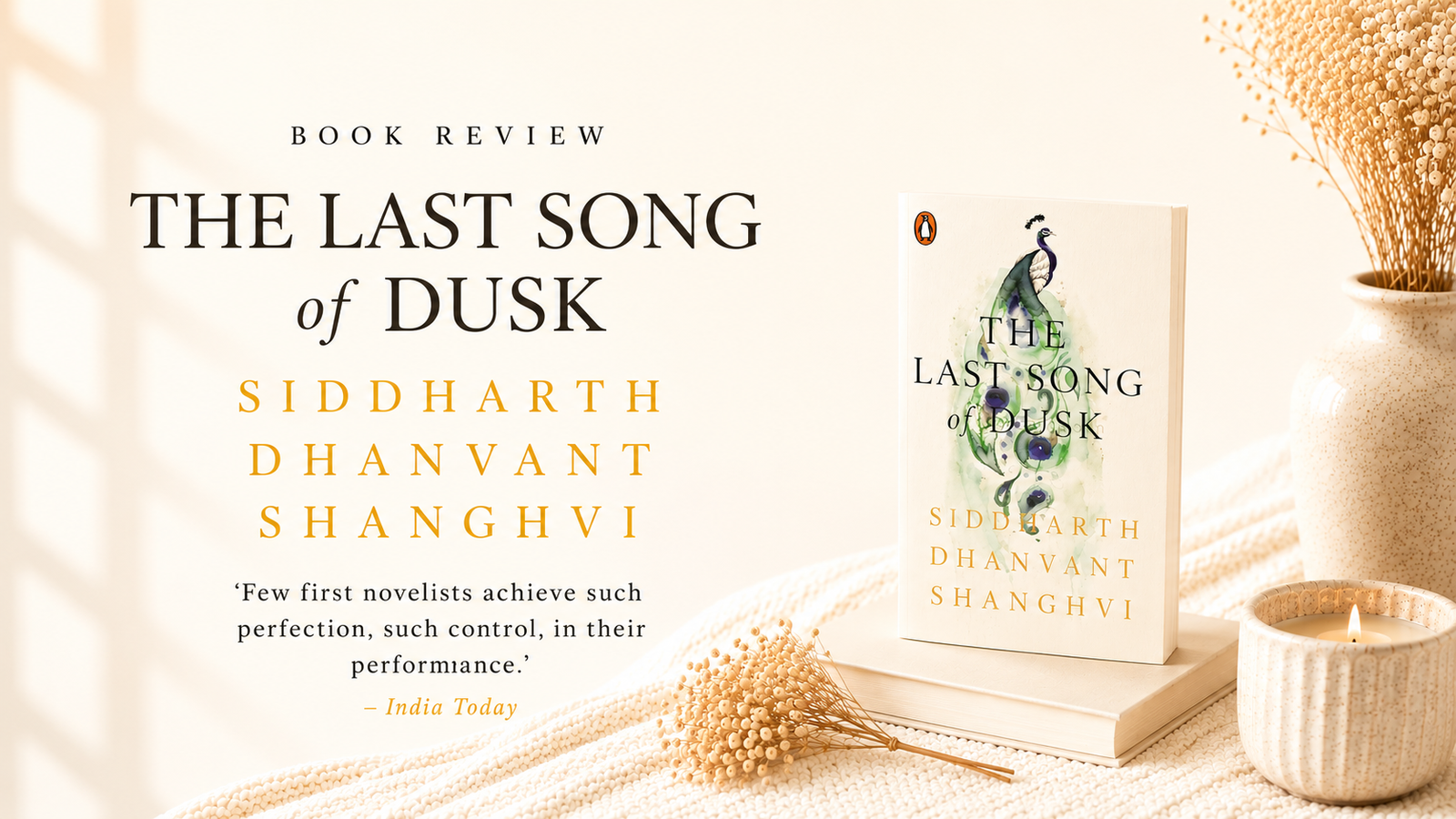
Some novels move through plot. Others move through memory, atmosphere, and emotion. The Last Song of Dusk by Siddharth Dhanvant Shanghvi belongs to the latter category. Richly lyrical and deeply immersive, it spans decades of personal and cultural transformation, weaving together themes of love, mortality, art, family, and identity into a story that feels almost dreamlike in its beauty.
Rather than racing toward dramatic revelations, the novel lingers over moments, relationships, and silences, inviting readers to experience history through the intimate lives of its characters.
Plot Summary of The Last Song of Dusk by Siddharth Dhanvant Shanghvi
Set across multiple generations and locations, Last Song of Dusk traces the lives of interconnected families navigating colonial India, changing social landscapes, and deeply personal reckonings. Their stories unfold against a backdrop of shifting political realities, inherited expectations, and evolving ideas of love and belonging.
As marriages, friendships, betrayals, and losses accumulate over time, the novel gradually reveals how memory and history shape individual destinies. Characters seek beauty through art, meaning through relationships, and redemption through acts both grand and quiet.
Rather than centring on a single protagonist, Shanghvi presents a tapestry of lives that intersect in unexpected ways, allowing readers to witness how one generation’s choices echo through the next.
The result is an expansive literary journey where emotion often carries more significance than plot mechanics.
Review of The Last Song of Dusk by Siddharth Dhanvant Shanghvi
At first glance, Last Song of Dusk may seem like a traditional family saga. However, Siddharth Dhanvant Shanghvi elevates the genre through prose that is almost painterly in its richness and through an emphasis on emotional resonance over conventional storytelling.
Instead of relying on rapid pacing or constant twists, Shanghvi allows relationships and inner lives to unfold gradually. Consequently, readers become immersed not only in events but also in moods, textures, and fleeting moments that might otherwise go unnoticed.
The novel’s greatest strength lies in its atmosphere. Cities, homes, gardens, and artworks feel vividly alive, while recurring reflections on beauty and mortality lend the narrative a meditative quality. In many ways, the setting becomes inseparable from the characters themselves.
At the same time, Last Song of Dusk demands patience. Its layered structure and poetic style favour contemplation over urgency, rewarding readers who embrace its slower rhythm.
Ultimately, the novel succeeds as an exploration of how people preserve fragments of themselves through memory, art, and love long after circumstances change.
Setting & Themes in The Last Song of Dusk by Siddharth Dhanvant Shanghvi
The novel traverses colonial and post colonial India with remarkable sensitivity, presenting landscapes that are as emotionally charged as they are historically grounded.
Gardens, mansions, city streets, and artistic spaces all contribute to a sense of impermanence, where beauty exists alongside inevitable decline. Consequently, place functions not merely as backdrop but as an active participant in the characters’ journeys.
Among the novel’s recurring themes are:
- Love across time and circumstance
- Memory and inheritance
- Family and generational legacy
- Beauty, art, and creativity
- Mortality and impermanence
- Identity and belonging
- Colonial transition and social change
Together, these ideas create a novel that feels both intimate and expansive.
Writing Style in The Last Song of Dusk by Siddharth Dhanvant Shanghvi
Siddharth Dhanvant Shanghvi writes with exceptional lyricism. His prose frequently resembles poetry, favouring sensory detail, metaphor, and emotional nuance over straightforward exposition.
Moreover, he trusts readers to engage actively with the narrative rather than explaining every implication. Images linger, conversations echo across chapters, and quiet observations often carry tremendous symbolic weight.
This stylistic approach may challenge readers accustomed to plot driven fiction. Nevertheless, those who appreciate literary language will likely find the experience deeply rewarding.
Strengths and Weaknesses
- Exquisitely lyrical prose
- Richly atmospheric storytelling
- Multi generational emotional depth
- Thoughtful exploration of memory and identity
- Beautiful integration of art, history, and family
- Deliberately slow pacing
- Large ensemble cast may require careful attention
- Poetic style may not appeal to readers seeking straightforward narratives
Who Should Read The Last Song of Dusk?
This novel is especially suited for readers who enjoy:
- Literary fiction
- Multi generational family sagas
- Character driven storytelling
- Indian historical fiction
- Beautifully written prose
- Reflective and emotionally layered narratives
- Books exploring art and memory
Readers who admire Amitav Ghosh, Arundhati Roy, Vikram Seth, or Michael Ondaatje may find Last Song of Dusk particularly rewarding.
Final Verdict
Last Song of Dusk is less interested in rushing toward conclusions than in preserving moments of beauty before they fade. Siddharth Dhanvant Shanghvi crafts a luminous meditation on family, memory, identity, and the passage of time, reminding readers that the quietest stories often leave the deepest impressions.
While its poetic style and measured pace may not suit every reader, those willing to surrender to its rhythms will discover a novel of remarkable elegance and emotional depth. It is a book best savoured slowly, allowing its language and imagery to linger long after the final page.
Frequently Asked Questions
Is The Last Song of Dusk by Siddharth Dhanvant Shanghvi worth reading?
Yes. Readers who appreciate literary fiction, lyrical prose, and emotionally rich family sagas will find it a rewarding and memorable experience.
What is The Last Song of Dusk about?
The novel follows interconnected lives across generations, exploring themes of love, memory, family, art, and identity against the backdrop of a changing India.
Is The Last Song of Dusk plot driven?
Not primarily. It emphasises atmosphere, character development, and emotional reflection over fast paced plotting.
What genre is The Last Song of Dusk?
It is literary fiction with elements of historical fiction, family saga, and coming of age storytelling.
Who should read The Last Song of Dusk?
Fans of beautifully crafted prose, reflective narratives, and multi generational stories rooted in Indian history and culture are likely to enjoy it most.